Fitness Hub seca edition Onboarding Guide
About this Guide
This guide describes how trainers and members can complete the body composition scan on the new Fitness Hub seca edition.
About Fitness Hub seca edition
The Fitness Hub seca edition combines smart onboarding with precise body analysis. Members see progress, trainers save time, and studios create an experience that motivates even before the first training session.
Body Composition Scan Process
Bioelectrical Impedance Analysis (BIA) provides a fast, safe, and non-invasive way to understand your body beyond simple weight by measuring fat mass, muscle mass, body water balance, visceral fat, and cellular health. It helps distinguish fat loss from muscle loss, detects hydration issues and inflammation through Extracellular/Total Body Water (ECW/TBW) ratios, and evaluates overall cell vitality via phase angle. BIA supports personalized training and nutrition plans, tracks progress over time with meaningful metrics, identifies early health risks like high visceral fat or low muscle mass, and offers a far more accurate picture of health and fitness than BMI or a standard scale.
Waarschuwing
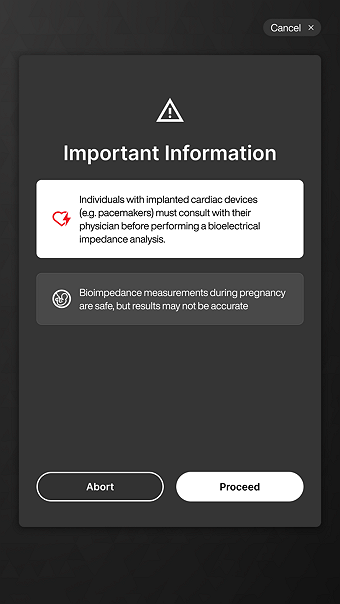
Do not perform Bioelectrical Impedance Analysis (BIA) on individuals with electronic implants (e.g., cardiac pacemakers) or active prostheses.
Do not perform Bioelectrical Impedance Analysis (BIA) on individuals connected to electronic life-support systems (e.g., artificial hearts or lungs) or portable electronic medical devices (e.g., ECG devices or infusion pumps).
Bioelectrical Impedance Analysis (BIA) should only be performed on pregnant individuals or those with cardiac arrhythmias after consulting an attending physician.
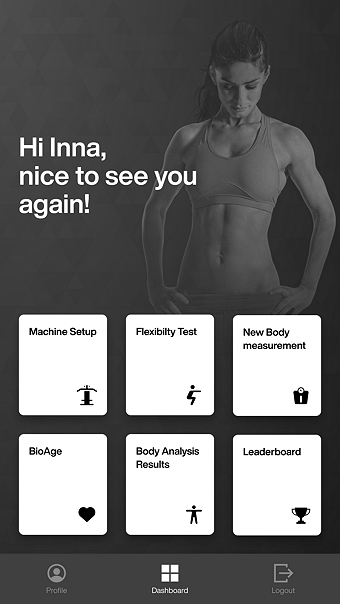
Login to Fitness Hub seca edition.
Select New Body measurement.
Opmerking
If your user profile information is incomplete (e.g., height), the system will prompt you to input the missing data.
Opmerking
You also have the option of doing a full body composition measurement as part of EGYM Genius and Smart Onboarding.
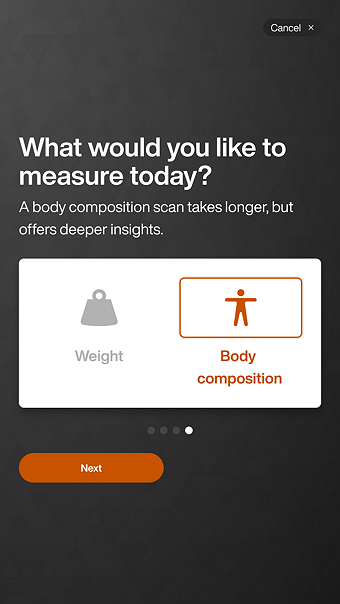
Select Body composition and tap Next.
Opmerking
You can choose to measure only your weight.
Tip
To ensure the most accurate measurement, please follow these guidelines:
Wipe the electrodes and the platform
Take the measurement at the same time of day
Avoid measuring immediately after a meal
Use the restroom before the measurement
Avoid alcohol for 12 hours prior to the measurement
Do not measure immediately after exercise or physical exertion
If you take medications or have an illness that affect fluid balance, consult your doctor
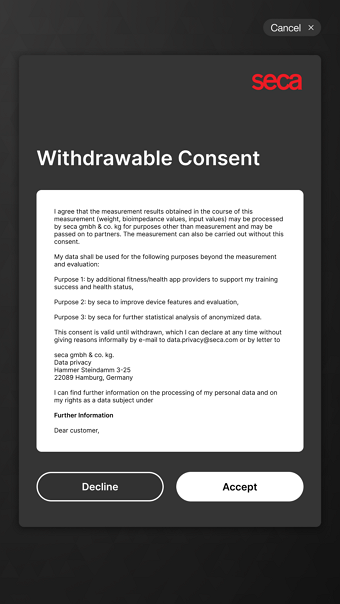
Review the Consent form and select Accept.
Opmerking
If you tap Decline, you will return to the What would you like to measure screen.
Opmerking
This screen only appears the first time you conduct a Body Composition Scan.
Review the Important Information and select Proceed.
Opmerking
If you tap Abort, you will return to the What would you like to measure screen.
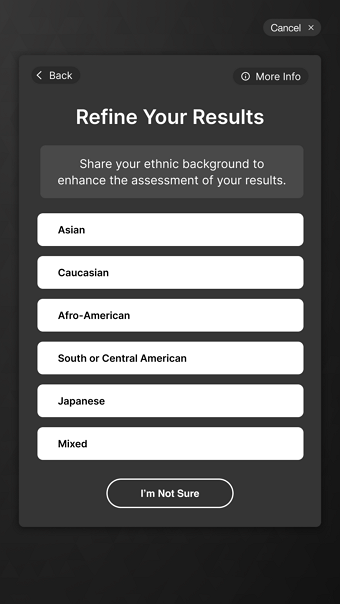
Select your Ethnic Background or I’m not Sure.
Opmerking
Ethnicity is considered in Bioelectrical Impedance Analysis (BIA) because body composition and physiological characteristics differ systematically across populations due to genetic, cultural, and environmental factors. These differences influence how electrical signals pass through the body and, consequently, how accurately BIA can estimate parameters like body fat, muscle mass, and total body water.
Opmerking
Gym Operators can disable this (EU only) in the Seca Analytics Cloud.
Opmerking
This screen only appears the first time you conduct a Body Composition Scan.
Take off your shoes and socks and step onto the platform.
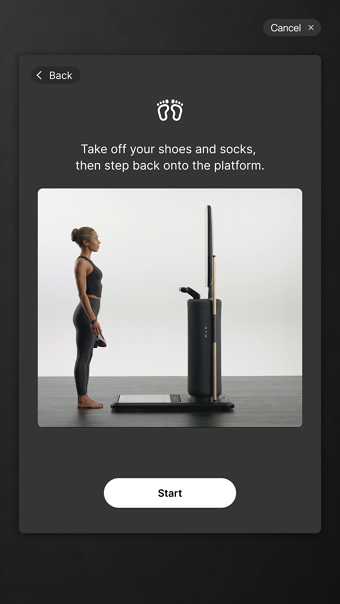
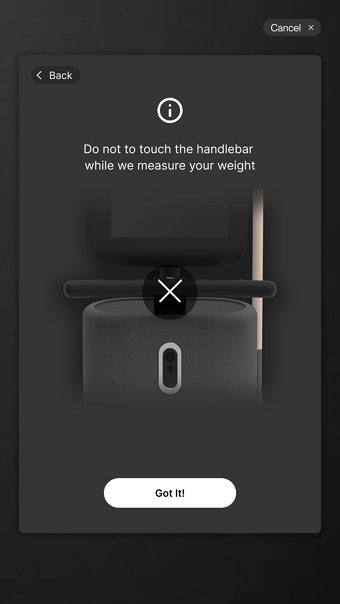
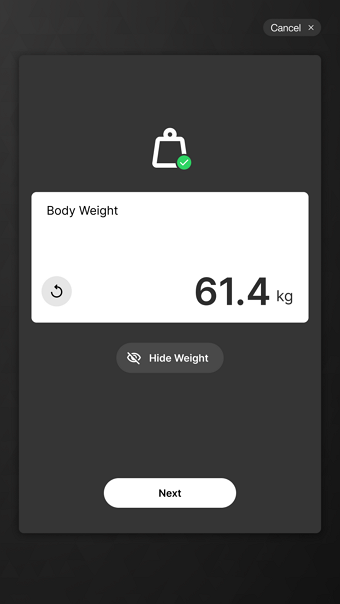
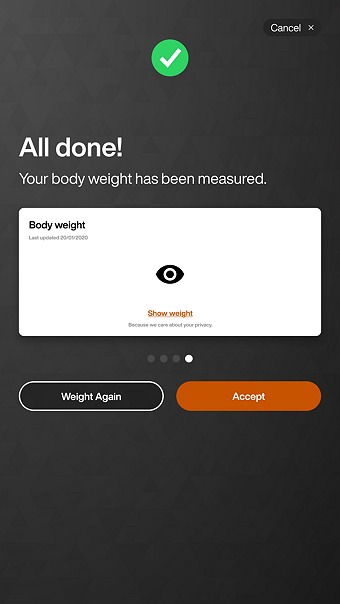
Tap Start > Got it! The Fitness Hub seca edition measures your weight. Tap Show Weight to display your weight.
Opmerking
You should not touch the handlebar during your weight measurement because it could affect the accuracy. If you push down on the handlebar, it could show a lower weight.
Opmerking
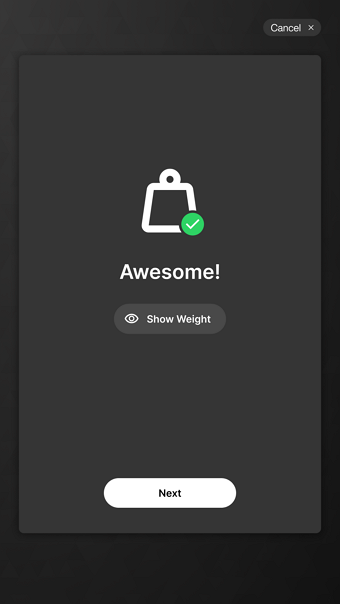
The Fitness Hub hides your weight to protect your privacy.
Tap Next.
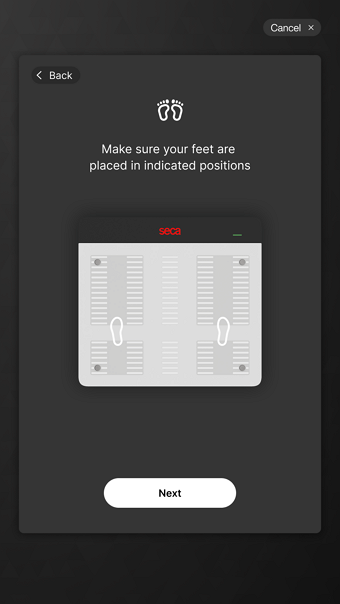
Position your feet in the indicated positions and tap Next.
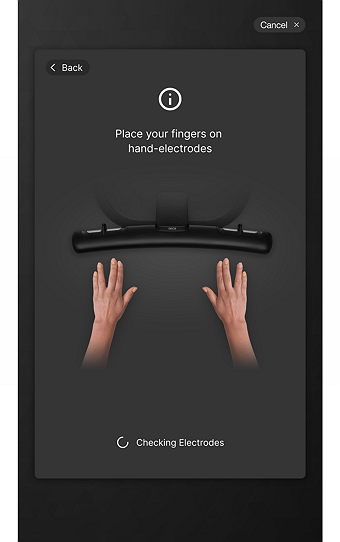
Place your fingers on the hand-electrodes (see screen below) and wait for the electrode check. Follow the prompts if you need to adjust your hand and foot positions.
Stand still and don’t move.
Opmerking
Bioelectrical Impedance Analysis (BIA) is a scientific method used to estimate body composition: body fat, muscle mass, and total body water. A weak alternating current is sent through the body and the electrical resistance – impedance – is measured. Muscles conduct the current better than fat. Based on the measured resistance, the composition of body tissues can be calculated.
Click Next and review your setup results. Tap Show weight to view and Accept or Weigh Again.
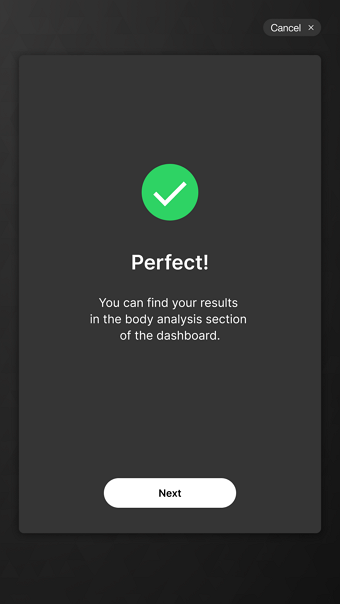
On the Dashboard, select Body Analysis Results.
Opmerking
You can also view your results on the BioAge screen. Tap BioAge > Metabolism to view your Metabolic BioAge and results.
Tap on each result to view more information, including prior measurements.
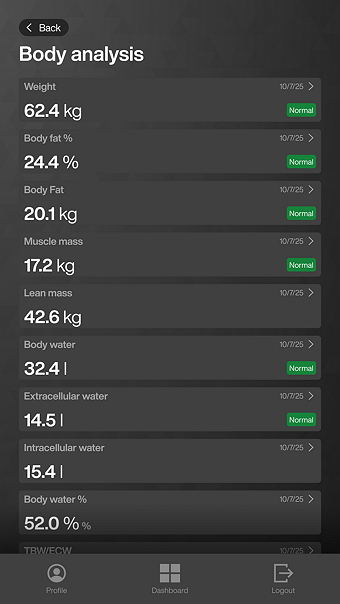
This information provides a distinct physiological insight into a person’s health, performance capacity, and metabolic condition. You will receive a Excellent, Normal, Low, or Elevated score. The results include:
Weight: Body weight alone doesn’t say much about your health. What matters more is your body composition (body fat percentage, lean muscle mass) but a higher body weight places more stress on your joints and tendons.
Body Mass Index (BMI): a common measurement to relate body weight to height. A healthy range is considered to be between 20 and 25. But it has its limits, as people with a lot of muscle mass can have a BMI greater than 25 and still be healthy. A better measure is your body composition - how much of your body is fat vs. muscle. With regular exercise and good nutrition, you can then positively influence these values.
Body fat %, Body fat: A good indicator of body composition. Too high body fat percentage is a basic health risk indicator. Excellent body fat levels uncover muscles. Can be positively influenced by physical activity and healthy nutrition.
Muscle mass: muscles are important for life quality. Too low values are a risk indicator for injuries and frailty (Sarcopenia). Healthy muscles regulate your immune system, reduce inflammation and improve metabolism (Myokines). Positively influenced by strength training.
Lean mass: sum of muscle, bone, inner organ, water, tendon, and blood weight. High values correlated to an aesthetic body definition and too low values with a low fitness level. Positively influenced by strength training and healthy nutrition.
Body water, Body water %: Solvent, transport agent, nutrient resource, and temperature regulator. Dehydration is a dangerous health risk and quite common. Too much water intake is less common but can also be a problem under certain conditions. It is divided into two major compartments: intracellular water and extracellular water.
Extracellular water: The amount of body water represented by all fluid components in your cardiovascular system. It is your metabolic transport medium. Too low values indicate unhealthy dehydration. Endurance training can improve your body water balance.
Intracellular water: the total amount of body water inside your cells. Too low values indicate unhealthy dehydration. Endurance training can improve your body water balance.
Extracellular Water (ECW) / Total Body Water (TBW): the percentage of total body water outside your cells. This shows whether your body fluids are balanced - a key sign of cell health and hydration status.
Visceral Fat Area, Visceral Fat Level: The fat in your abdominal cavity around the inner organs. High values are a risk factor for metabolic diseases and inflammatory processes. Can be significantly reduced by exercise.
Body Phase Angle: An indicator of body cell health and integrity. A high phase angle indicates intact cell membranes. It goes up when you are healthy and down when you are sick. It also goes down as you age. When you increase your phase angle, you slow down aging. The phase angle can be best improved by an increase in fat free mass relative to body weight.
Extracellular water %: The fraction of body water represented by all fluid components in your cardiovascular system. It is your metabolic transport medium. Too low values indicate unhealthy dehydration. Endurance training can improve your body water balance.
Basal Metabolic Rate (BMR): the minimum amount of energy (calories) your body needs to perform its most basic life-sustaining functions while at rest.
Fat mass - left arm, right arm: Elevated values may indicate disproportionate fat distribution. Aim to balance both sides to support overall symmetry and functional movement. Can be improved through targeted single-arm strength training combined with overall fat-reduction strategies.
Fat mass - left leg, right leg: Elevated values may indicate disproportionate fat distribution. Aim to balance both sides to support overall symmetry and functional movement. Can be improved through targeted single-leg strength training combined with overall fat-reduction strategies.
Fat mass - torso: Elevated values may indicate disproportionate fat distribution in your trunk. Your trunk is the center of your body and plays a crucial role in your back stability. Can be improved by abdominal or back training combined with overall fat reduction strategies.
Muscle mass - left arm, right arm: Low values indicate weak segmental status. Focus to balance your right and left side to avoid muscular imbalances. Can be improved by single arm biceps or triceps training.
Muscle mass - left leg, right leg: Low values indicate weak segmental status. Focus to balance your right and left side to avoid muscular imbalances. Can be improved by single leg training and healthy nutrition
Muscle mass - torso: Low values indicate weak segmental status. Focus on healthy muscle mass in your trunk. Your trunk is the center of your body and plays a crucial role in your back stability. Can be improved by abdominal or back training.
Lean mass - left arm, right arm: Low values indicate weak segmental status. Focus to balance your right and left side to avoid muscular imbalances. Can be improved by single arm training.
Lean mass - left leg, right leg: Low values indicate weak segmental status. Focus to balance your right and left side to avoid muscular imbalances. Can be improved by single leg training and healthy nutrition.
Lean mass - torso: Low values indicate weak segmental status. Focus on healthy muscle mass in your trunk. Your trunk is the center of your body and plays a crucial role in your back stability. Can be improved by abdominal or back training.
Opmerking
You can also view the results in the Seca analytics cloud.