Smart Strength Exercises
|
| ||
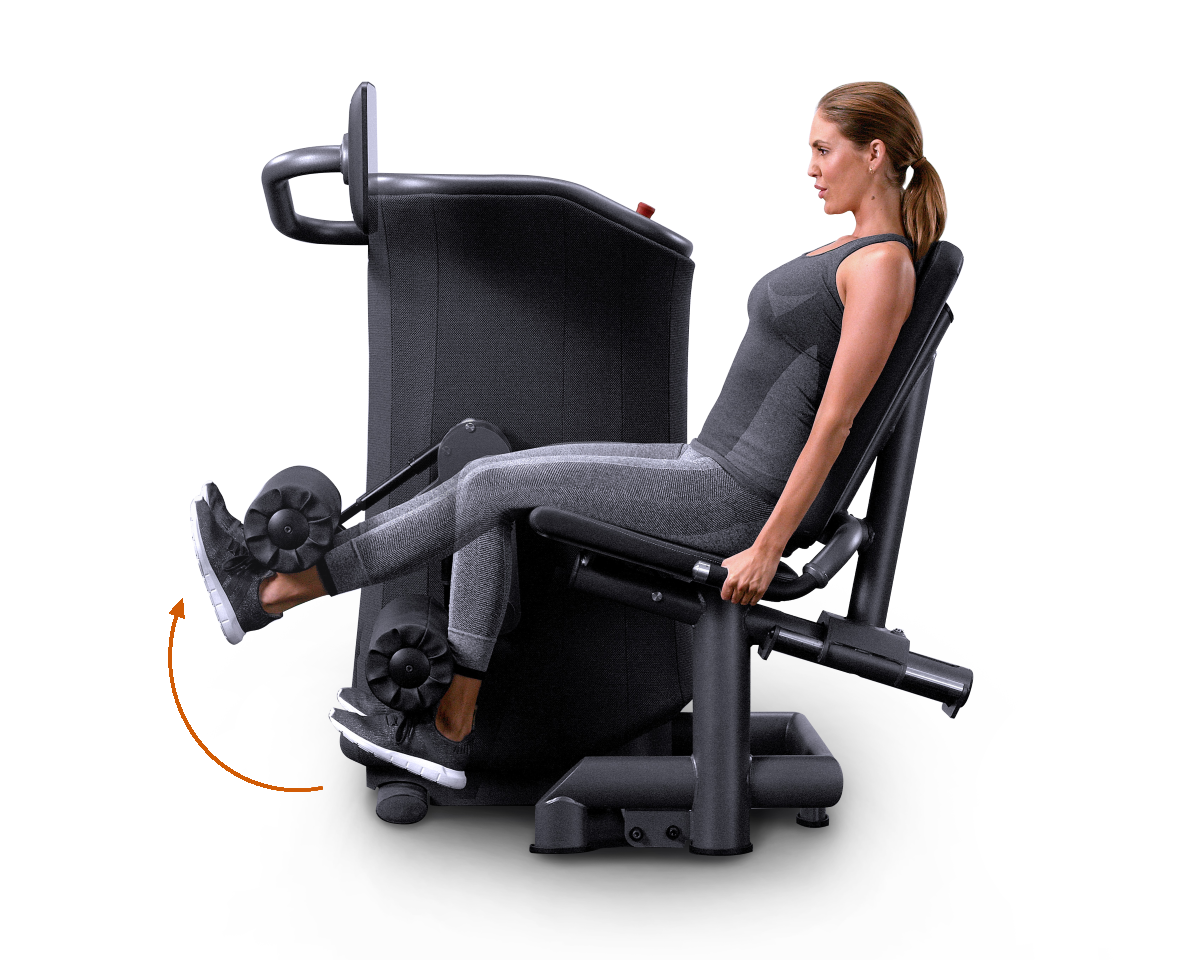
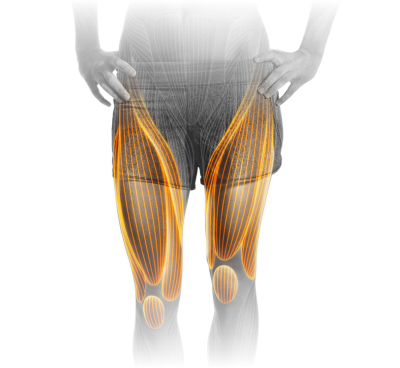
Primary muscles Quadriceps femoris |
Get ready
Sit with your glutes fully against the backrest. Adjust the backrest so your knee joint aligns with the machine’s rotational axis.
Position the roller pad just above your ankle.
Engage your core and lightly pull on the side handles for stability.
Note
Hold the side handles to prevent your glutes from lifting out of the seat.
Start exercising
Start with your knees bent as far back as comfortably possible.
Note
If bending the knees is uncomfortable, begin at approximately a 90° knee angle.
Extend your knees against the resistance until your legs are straight.
Return to the starting position, keeping your legs parallel.
|
| ||
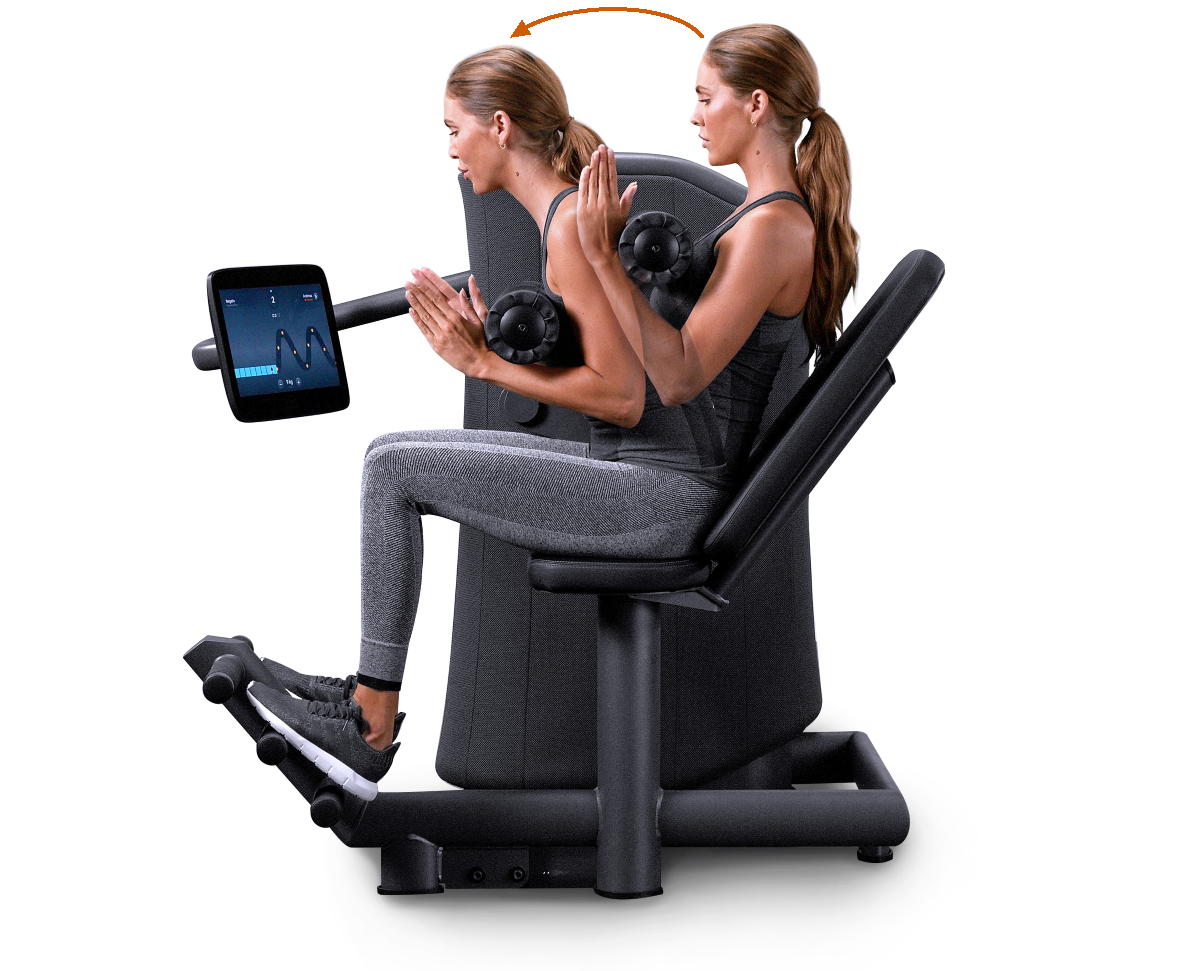
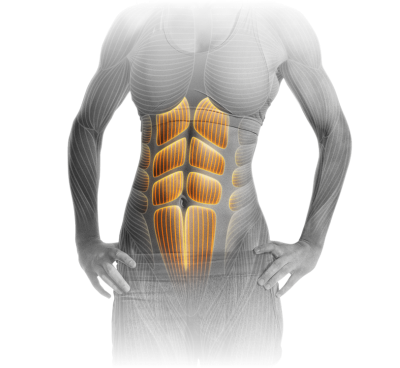
Primary muscles Rectus abdominis Obliquus externus Obliquus internus Transversus abdominis | |||
Secondary muscles Psoas major Psoas minor Iliac Pyramidal |
Get ready
Sit with your thighs approximately parallel to the floor.
Place your feet flat and ensure they are not wedged between the bars of the footrest.
Adjust the roller pad so it rests just below the shoulders.
Place your forearms against the roller pad. Your palms should face each other, with your thumbs pointed at you.
Start exercising
Begin with your upper body slightly flexed forward, keeping your hips stable and core engaged.
Bend your upper body forward and downward against the resistance, keeping your arms bent and in contact with the roller pad. Keep your head straight and in line with your back.
Return to the starting position in a controlled motion.
|
| ||
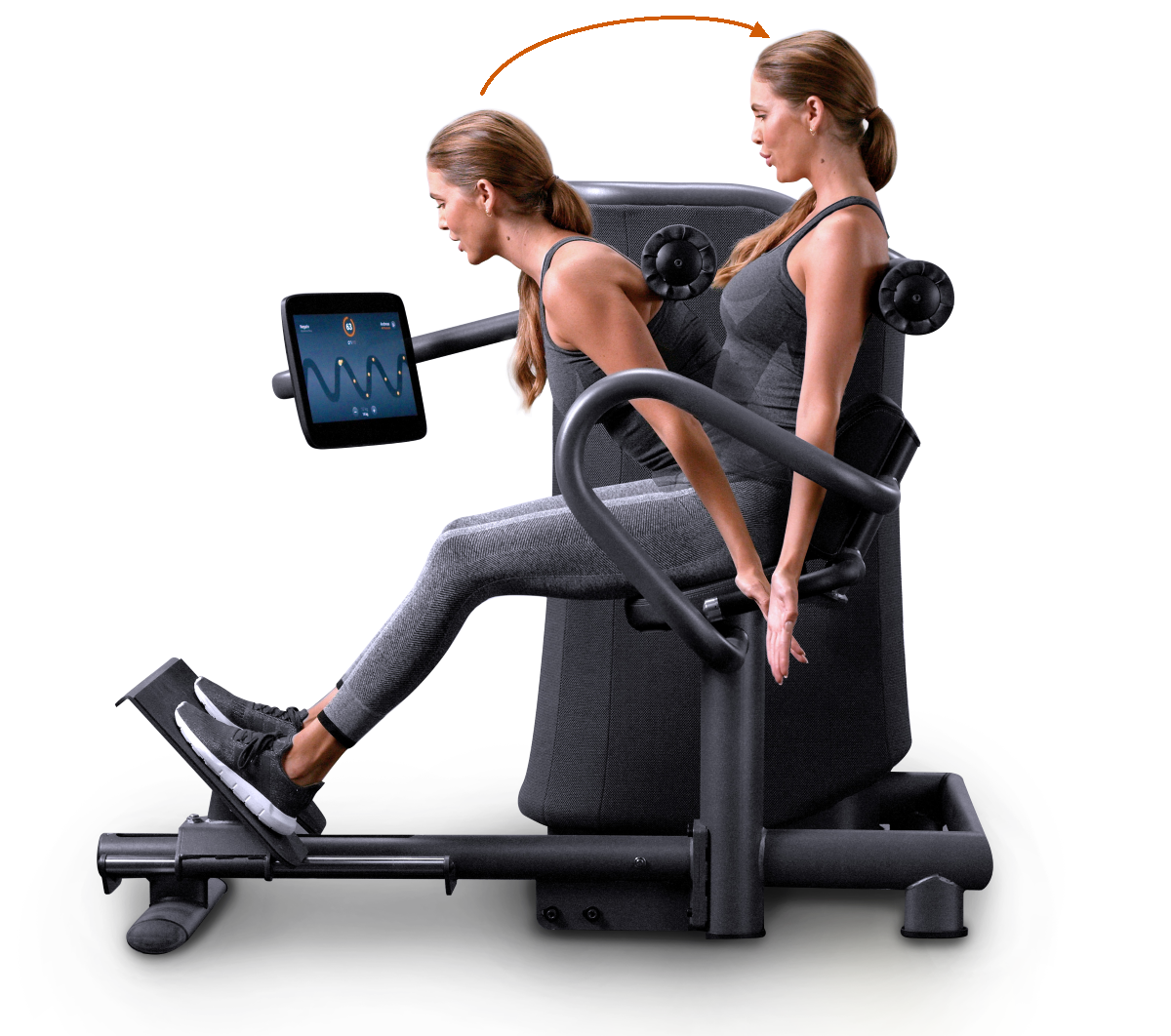
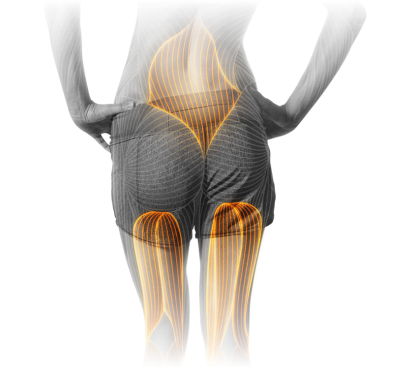
Primary muscles Erector spinae Gluteus maximus Hamstring |
Get ready
Sit upright with your glutes fully against the backrest and lift your chest.
Engage your core.
Place your feet in the center of the footplate, with your knees slightly bent.
Adjust the back roller to the middle of the shoulder blades.
Hold the side handles for stability, especially during strength measurement.
Start exercising
Start with the upper body leaned forward, as far as possible without compensation.
Extend the upper body backward against the resistance until the torso is upright and supported by the backrest. Keep your back straight throughout the exercise.
Return to the flexed position in a controlled motion. Keep contact with the back roller throughout the exercise.
 |
| |
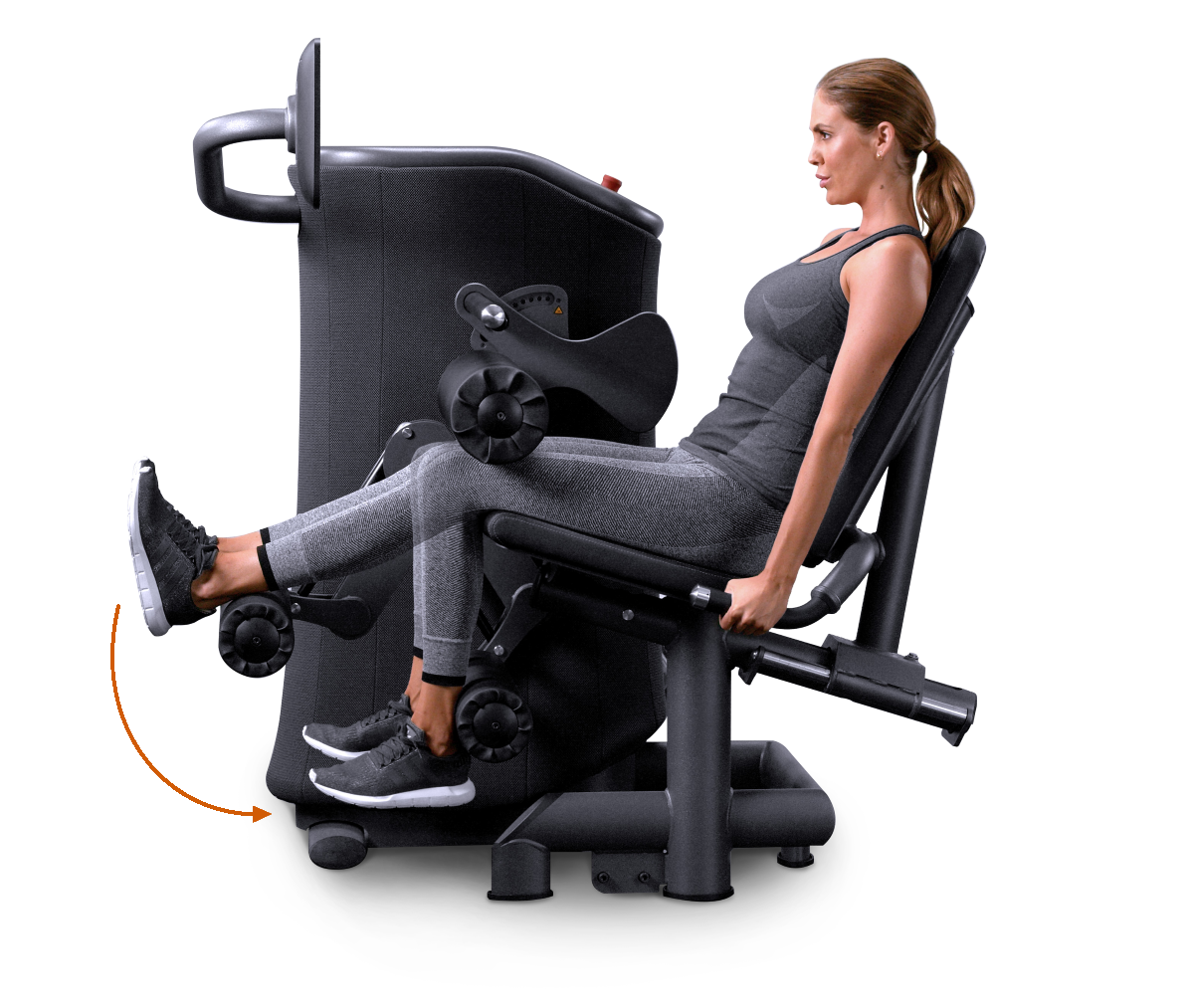
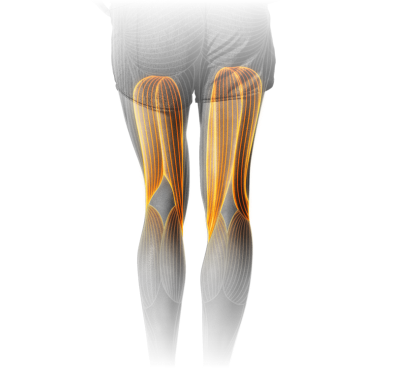
Primary muscles Hamstring | ||
Secondary muscles Gastrocnemius Popliteal |
Get ready
Sit with your glutes fully against the backrest. Adjust the backrest so the knee joint aligns with the machine’s rotational axis.
Position the lower roller pad between the calf and the Achilles tendon.
Secure the upper roller pad firmly on your thighs.
Hold the side handles for stability and engage your core.
Start exercising
Start with your legs extended and the knees slightly bent.
Bending at the knees, move your lower as far back as comfortable possible against the resistance. Keep your legs parallel and toes pointed upward.
Return to the starting position in a controlled motion.
 |
| |
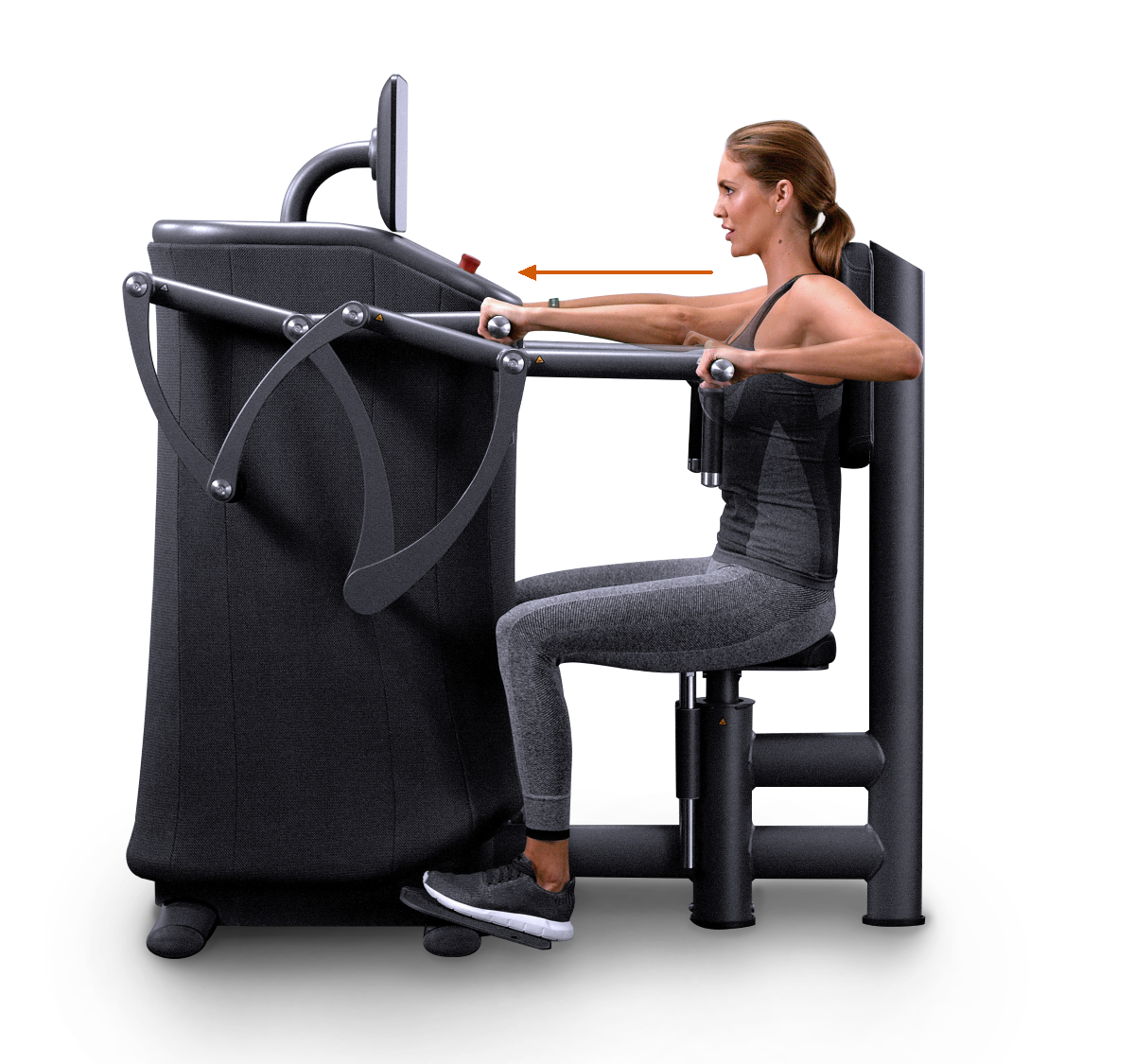
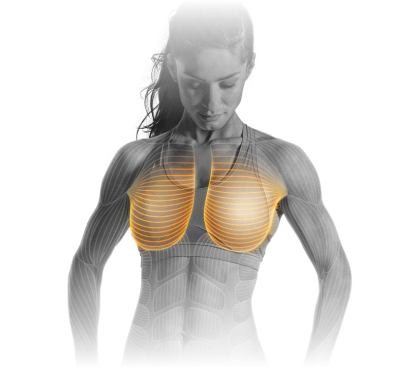
Primary muscles Pectoral Triceps brachii Anterior deltoid | ||
Secondary muscles Anterior serratus Anconeus |
Get ready
Sit with your back straight against the backrest. Slide slightly forward so only your shoulders are in contact with the backrest.
Adjust the seat so the handles are positioned between chest and shoulder height.
Hold the handles, keeping the shoulders lowered.
Note
Grip variation
Neutral grip (palms facing each other): more activation of the triceps, and reduced strain on the shoulder joint.
Pronated grip (palms facing the floor): more activation of the pectoralis major.
Start exercising
Start with your elbows bent and the handles at chest height.
Extend your arms forward against the resistance until your arms are almost straight. Avoid locking your elbows.
Return to the starting position in a controlled motion.
 |
| |
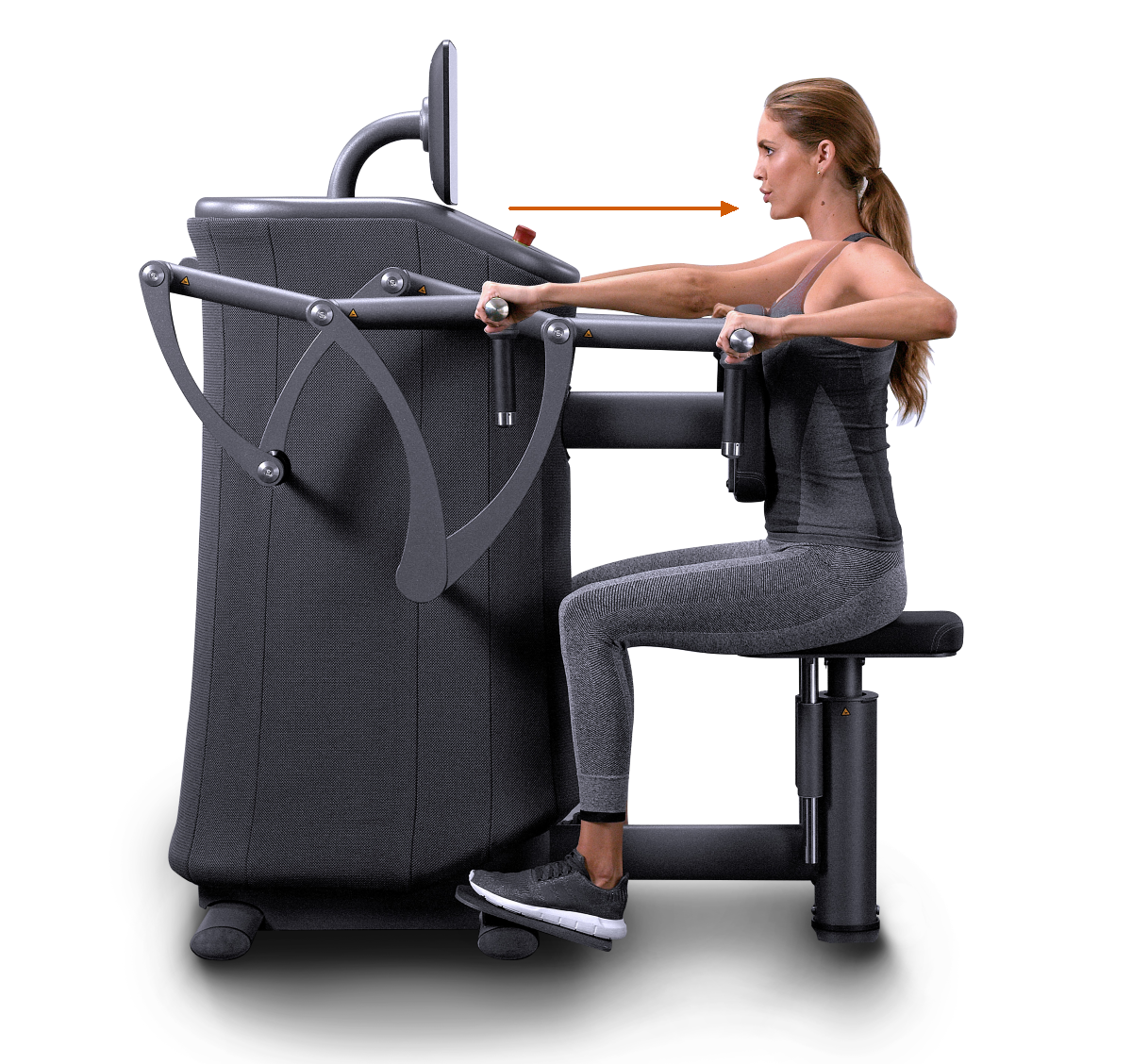
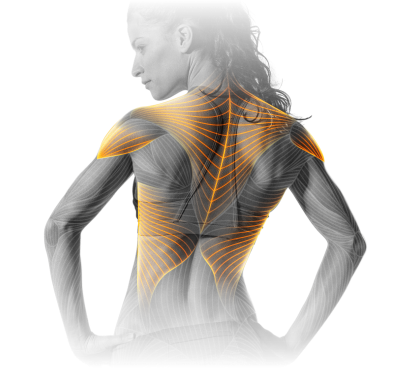
Primary muscles Latissimus dorsi Middle trapezius Rhomboid Posterior deltoid | ||
Secondary muscles Triceps brachii Biceps Brachialis Brachioradialis |
Get ready
Sit upright with your chest against the chest pad, hips slightly behind your shoulders.
Adjust the seat height so your forearms are parallel to the floor when holding the handles.
Note
Grip variation
Neutral grip (palms facing each other): more activation of the latissimus dorsi and teres major, and reduced strain on the shoulder joint.
Pronated grip (palms facing the floor): more activation of the rear deltoids, middle traps, and rhomboids.
Start exercising
Start with your arms extended forward and the shoulders relaxed.
Pull the handles toward your body against the resistance. Pull your shoulder blades toward your spine and keep your shoulders lowered.
Return to the starting position in a controlled motion, keeping the upper body upright.
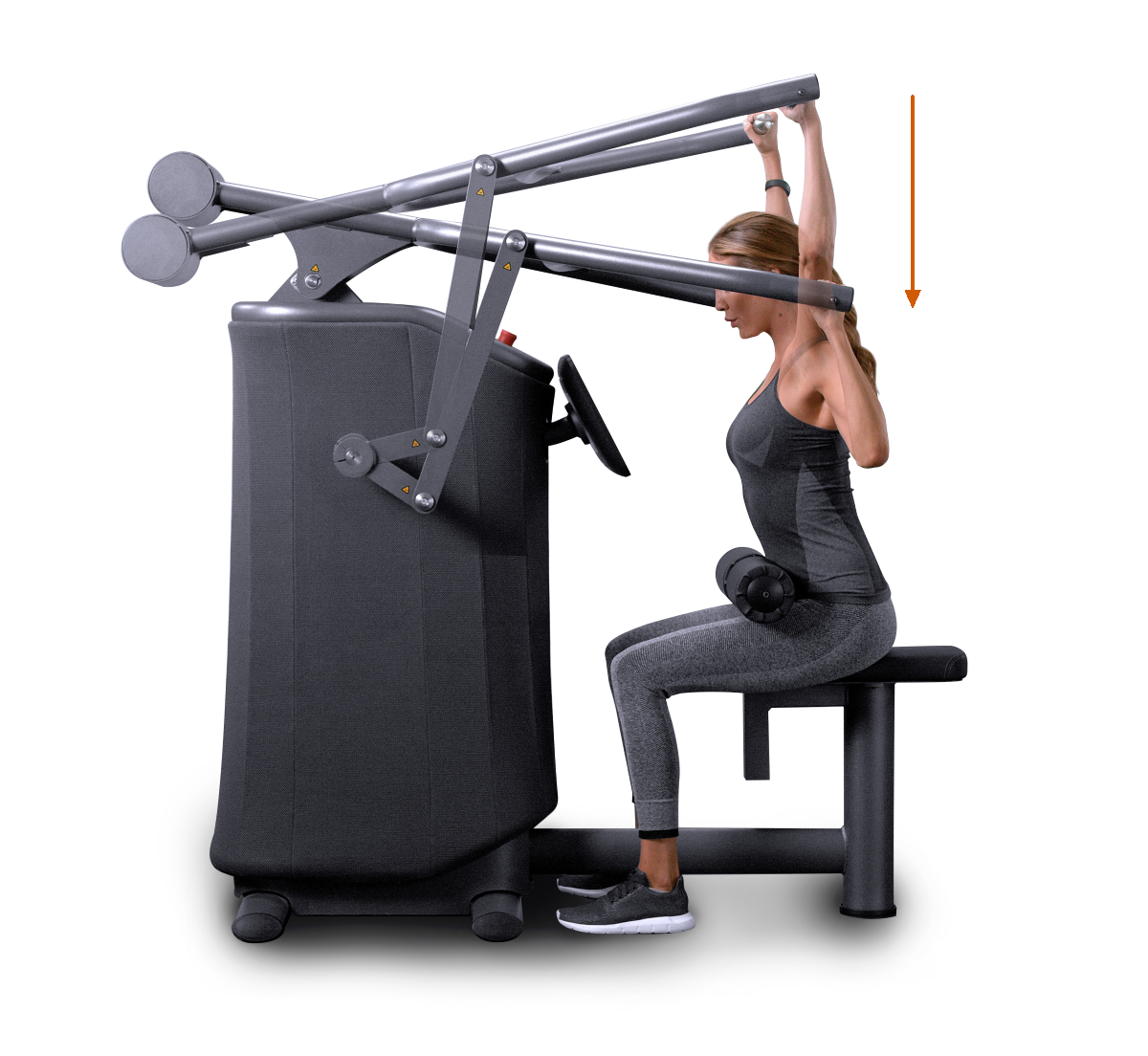 |
| |
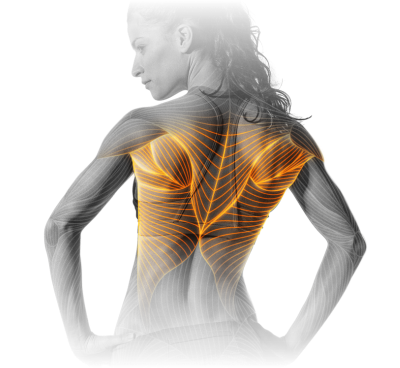
Primary muscles Latissimus dorsi Inferior trapezius Rhomboid Posterior deltoid Teres major | ||
Secondary muscles Triceps brachii Biceps Brachialis Brachioradial |
Get ready
Sit upright, as far forward as possible.
Adjust the pad so it rests firmly on your thighs.
Hold the handles, keeping your shoulders lowered.
Note
Grip variation
Neutral grip (palms facing each other): more activation of the lower lats and biceps, and reduced strain on the shoulder joint.
Pronated grip (palms facing the floor): more activation of the upper lats and teres major.
Start exercising
Start with your arms extended overhead.
Pull the bar downward against the resistance until it reaches approximately chin height, keeping your upper body upright and shoulders lowered.
Return to the starting position in a controlled motion.
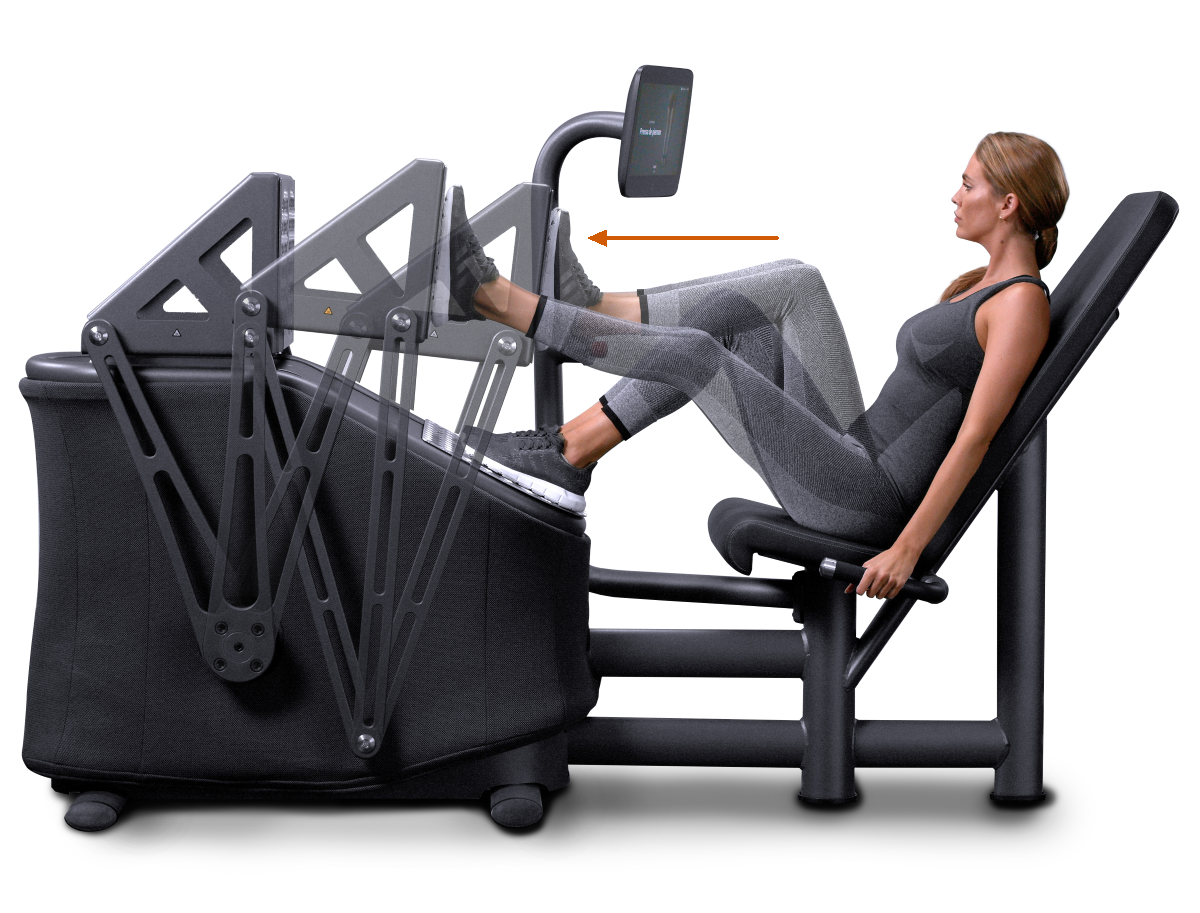 |
| |
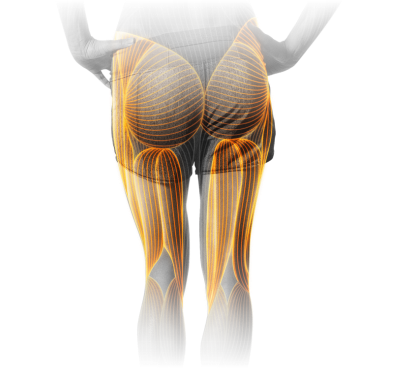
Primary muscles Quadriceps femoris Hamstring Gluteus maximus Gastrocnemius Soleus | ||
Secondary muscles Erector spinae Medial compartment of thigh |
Get ready
Sit with your back fully against the backrest and your back straight.
Place your feet flat on the footplate, hip-width apart, with toes pointing slightly outward.
Hold the side handles for stability.
Adjust the footplate range so the knees are bent as far as possible without compensation in the starting position and slightly bent (not locked) in the extended position.
Start exercising
Start with your knees bent, keeping the hips and back in contact with the backrest.
Extend your legs against the resistance until your legs are almost straight. Keep your knees aligned with your feet throughout the movement.
Caution
Do not lock your knees.
Return to the bent position in a controlled motion.
 |
| |
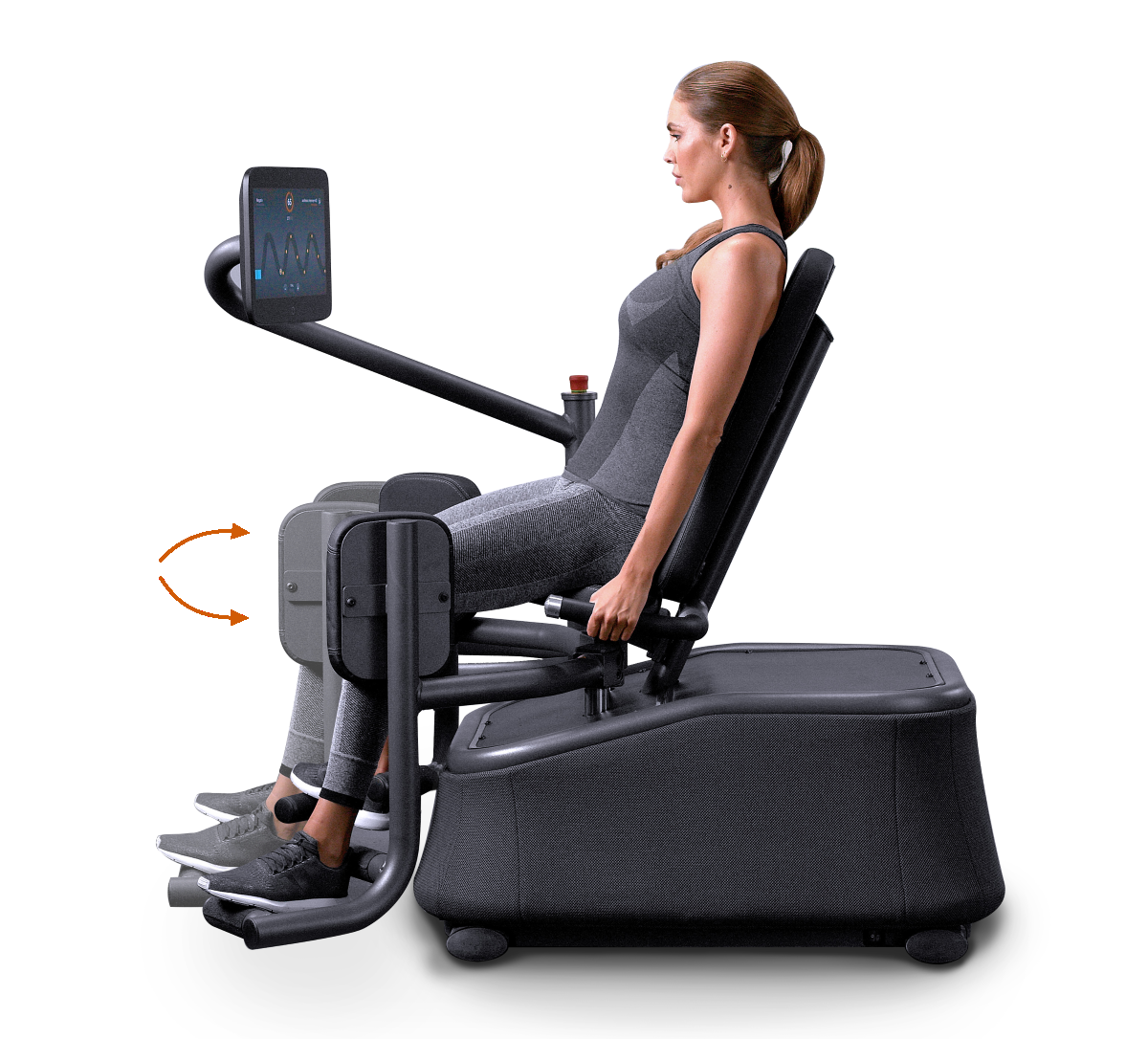
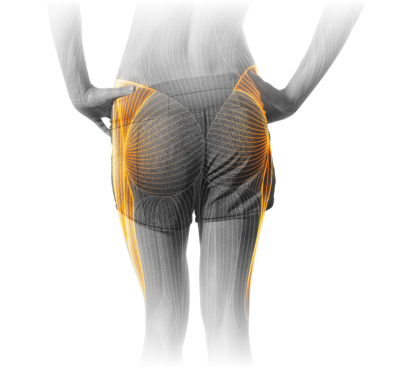
Primary muscles Gluteus medius Gluteus minimus | ||
Secondary muscles Gluteus maximus Tensor fasciae latae |
Get ready
Sit with your glutes against the backrest and your back straight.
Note
Seat variation
Sit upright with your feet on the footrest closest to your body.
Sit against the backrest with your feet on the further footrest.
Place your feet on the footrests and position the outside of your thighs or knees against the pads.
Hold the side handles for stability.
Start exercising
Start with your legs close together.
Press your legs outward against the resistance until a comfortable stretch is felt in your hips.
Return to the starting position in a controlled motion.
 |
| |
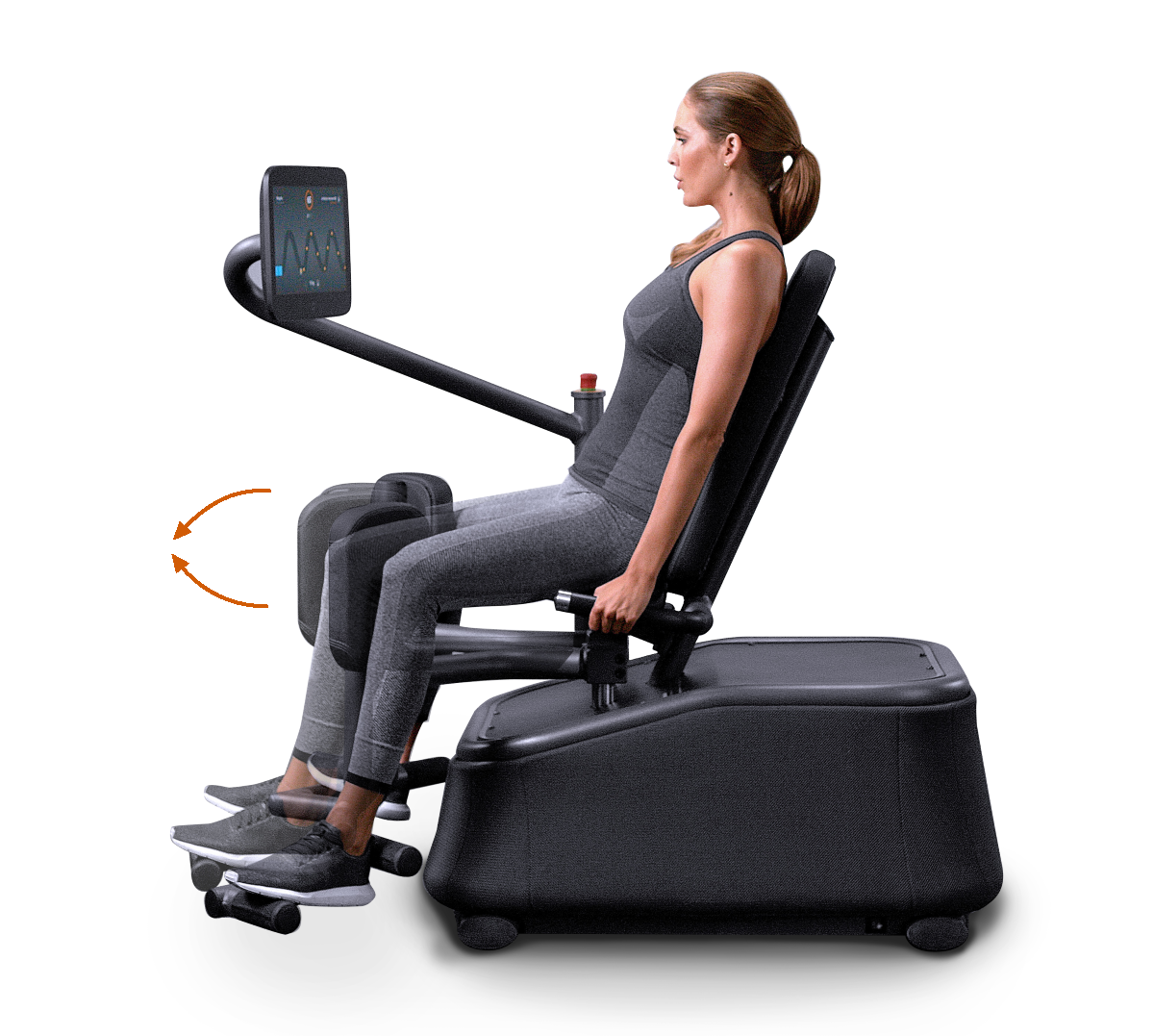
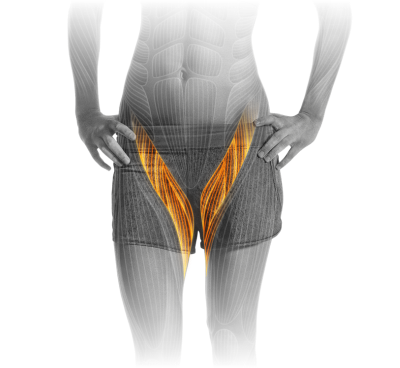
Primary muscles Medial compartment of thigh |
Get ready
Sit with your glutes against the backrest.
Note
Seat variation
Sit upright with your feet on the footrest closest to your body.
Sit against the backrest with your feet on the further footrest.
Place your feet on the footrests and position your inner thighs or knees against the pads.
Hold the side handles for stability.
Start exercising
Start with your legs open until a comfortable stretch is felt in your inner thighs.
Press the knee pads inward against the resistance until your legs are close together. Keep your upper body stable throughout the movement.
Return to the starting position in a controlled motion.
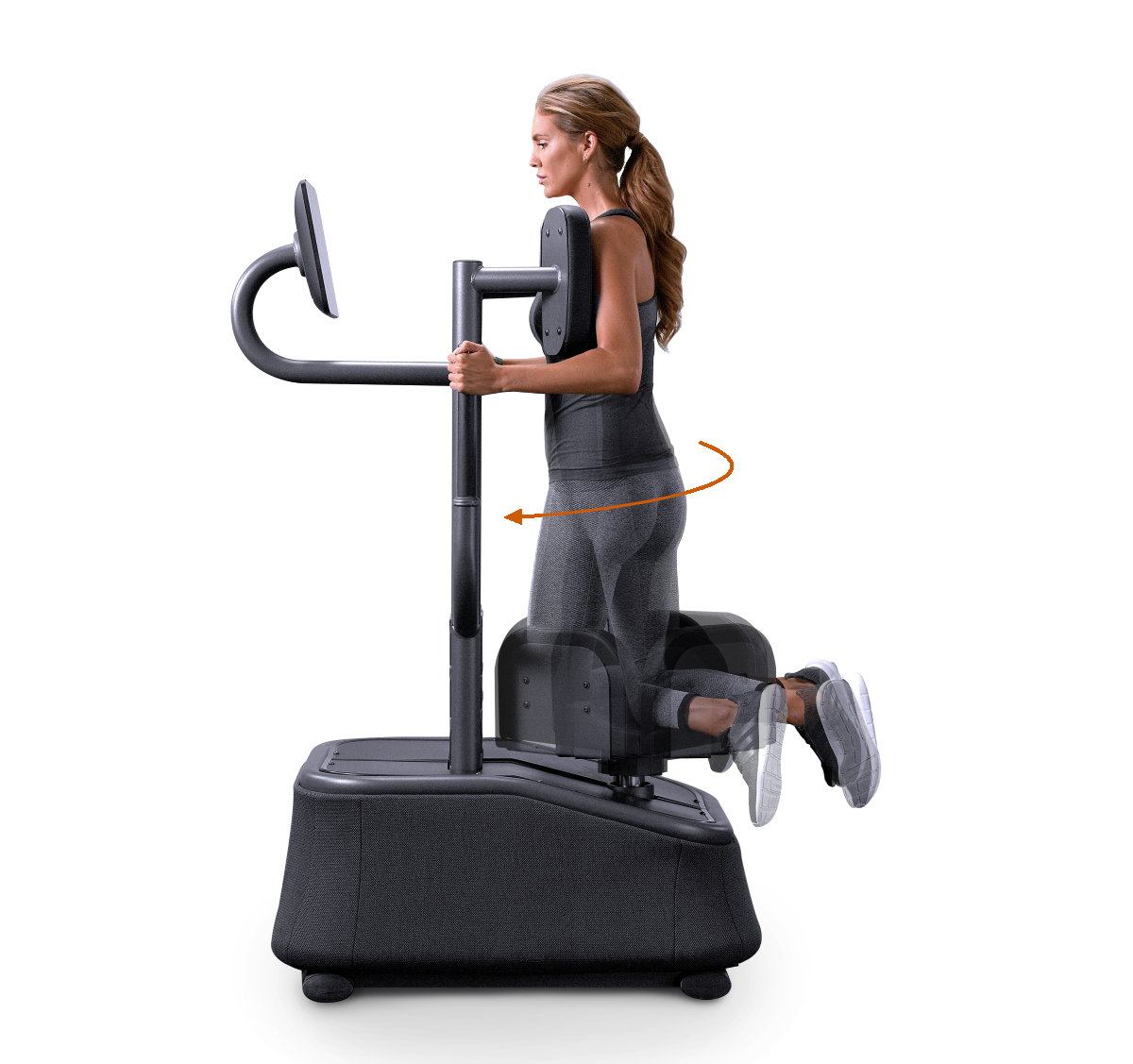 |
| |
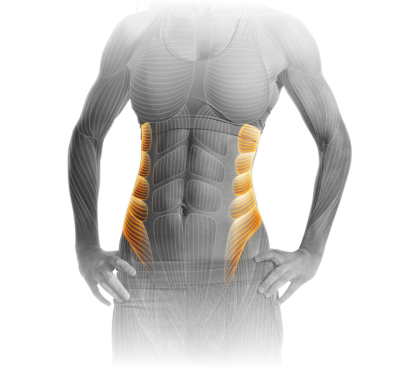
Primary muscles Obliquus internus abdominis Obliquus externus abdominis | ||
Secondary muscles Latissimus dorsi Erector spinae |
Get ready
Kneel in the machine with your knees placed slightly past the front edge of the pad.
Keep your upper body upright; align your knees, hips, and shoulders.
Hold the vertical handles.
Press your shoulders firmly against the side pads.
Start exercising
Start in a neutral position with your lower body aligned with your upper body.
Rotate the lower body to the right against the resistance, keeping your upper body stable and a firm grip on the handles.
Return to the starting position in a controlled motion.
Repeat the exercise rotating to the left.
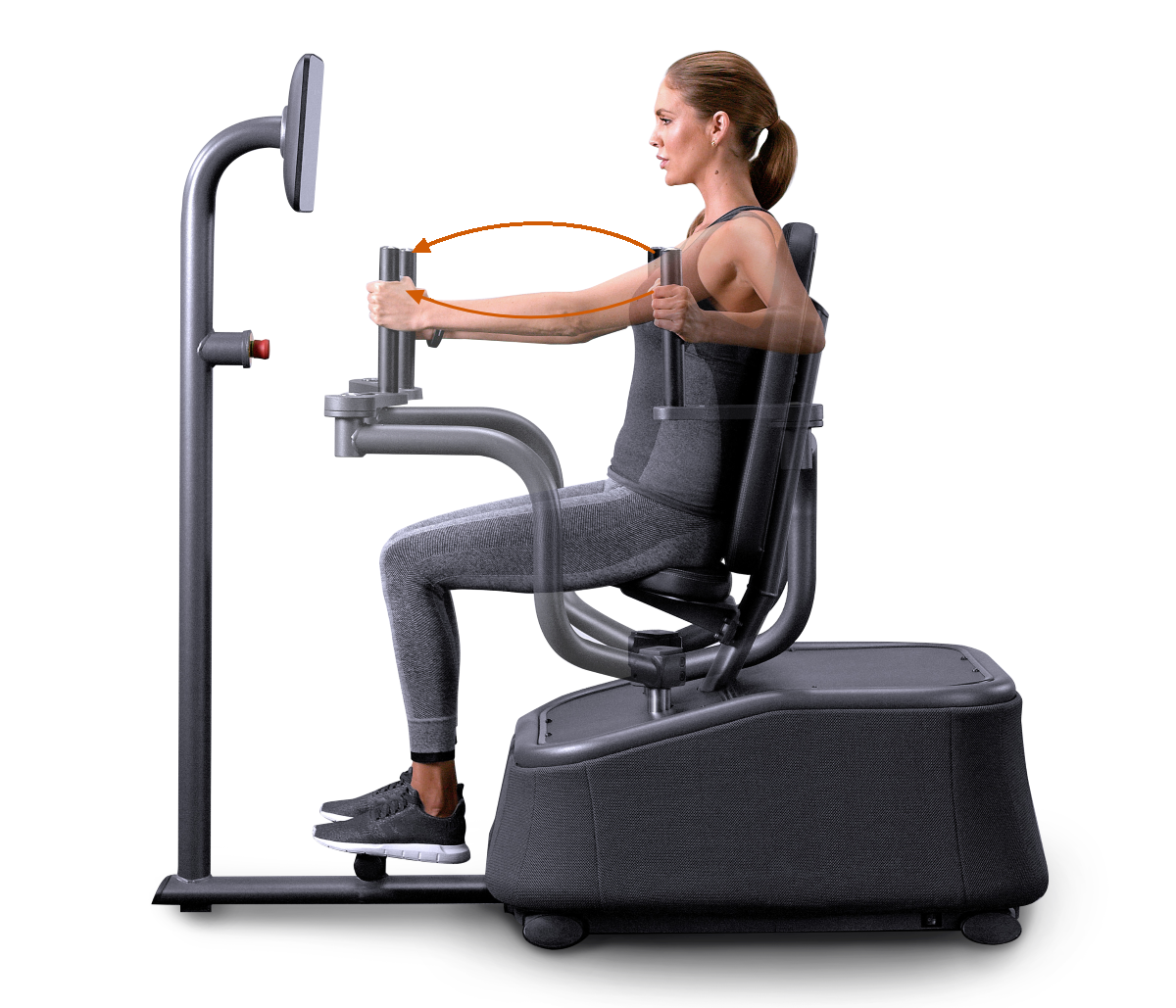 |
| |
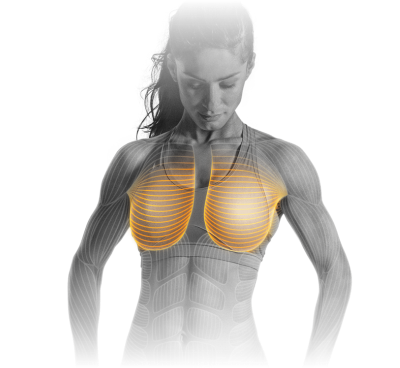
Primary muscles Pectoralis major Pectoralis minor Deltoid | ||
Secondary muscles Biceps brachii Coracobrachialis |
Get ready
Sit with your back straight against the backrest.
Hold the handles between chest and shoulder height. Keep your elbows slightly bent.
Start exercising
Start with your arms open to the sides until light tension is felt in the chest.
Bring the handles together against the resistance. Keep your shoulders lowered and elbows slightly bent.
Return to the starting position in a controlled motion.
 |
| |
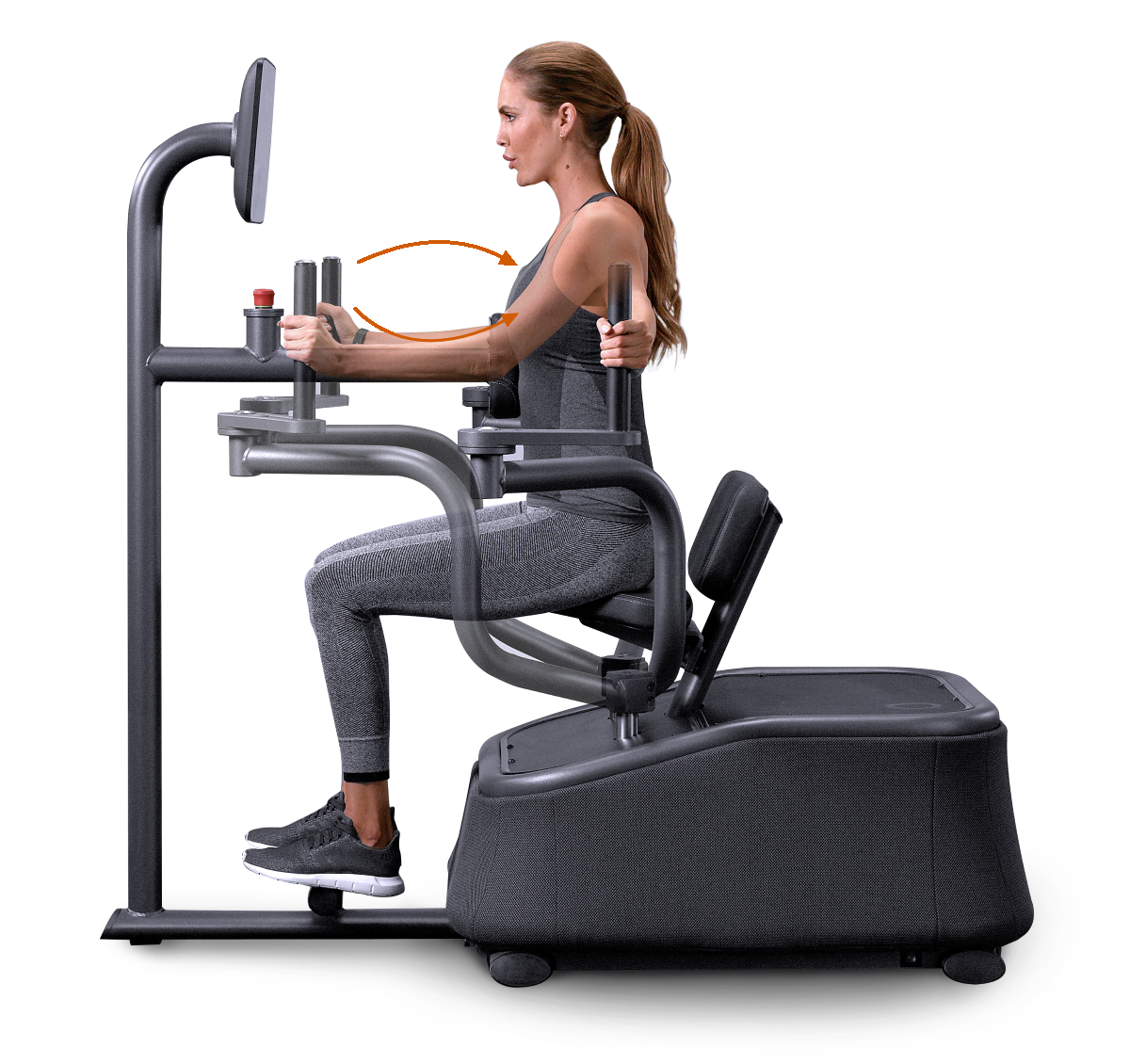
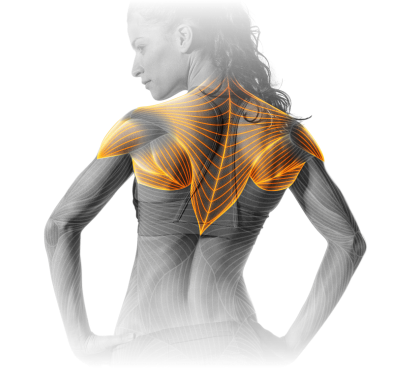
Primary muscles Middle trapezius Rhomboid | ||
Secondary muscles Posterior deltoid Triceps brachii |
Get ready
Sit upright and forward with your chest against the chest pad, not with your glutes against the backrest.
Hold the handles slightly below shoulder height with your elbows slightly bent.
Start exercising
Start with the handles close together in front of the body.
Open your arms outward and backward against the resistance until the handles are in line with the shoulders. Keep your shoulders lowered and elbows slightly bent.
Return to the starting position in a controlled motion.
 |
| |
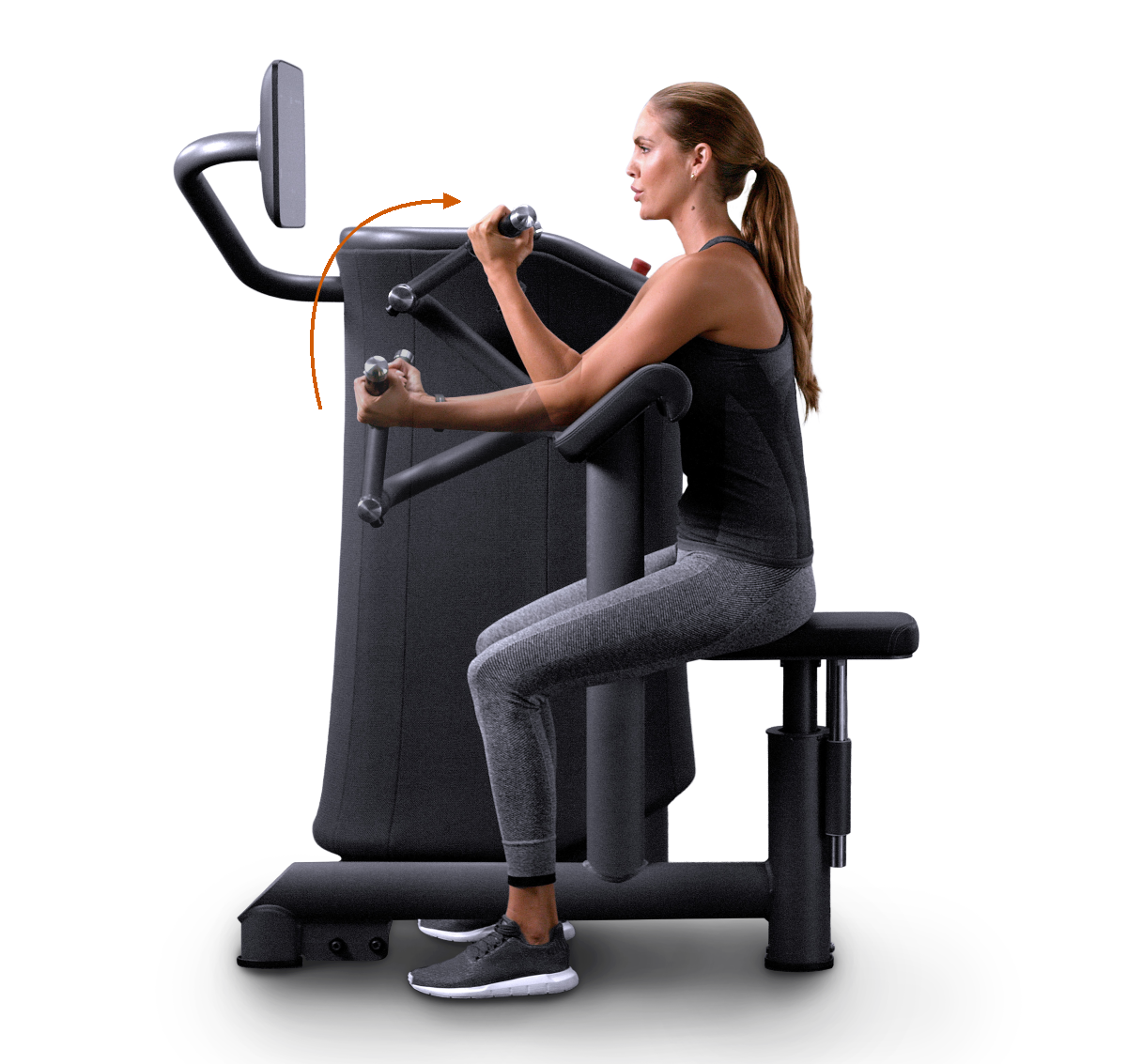
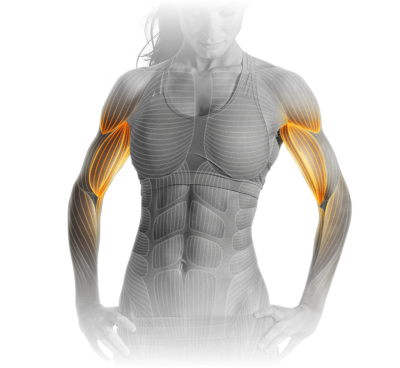
Primary muscles Biceps Brachialis | ||
Secondary muscles Brachioradialis |
Get ready
Sit on the seat and lean your upper body forward so your upper arms rest on the pad. Adjust the seat so the arm pad is at armpit height.
Position your elbows in line with the machine’s pivot point.
Hold the bar with an underhand grip.
Note
Grip variation
Wide underhand grip: works the biceps short head muscle
Narrow underhand grip: works the biceps long head muscle
Start exercising
Start with your arms extended, with your elbows slightly bent.
Bend your arms upward against the resistance as far as comfortably possible. Keep your arms against the pad and your shoulders lowered.
Return to the starting position in a controlled motion.
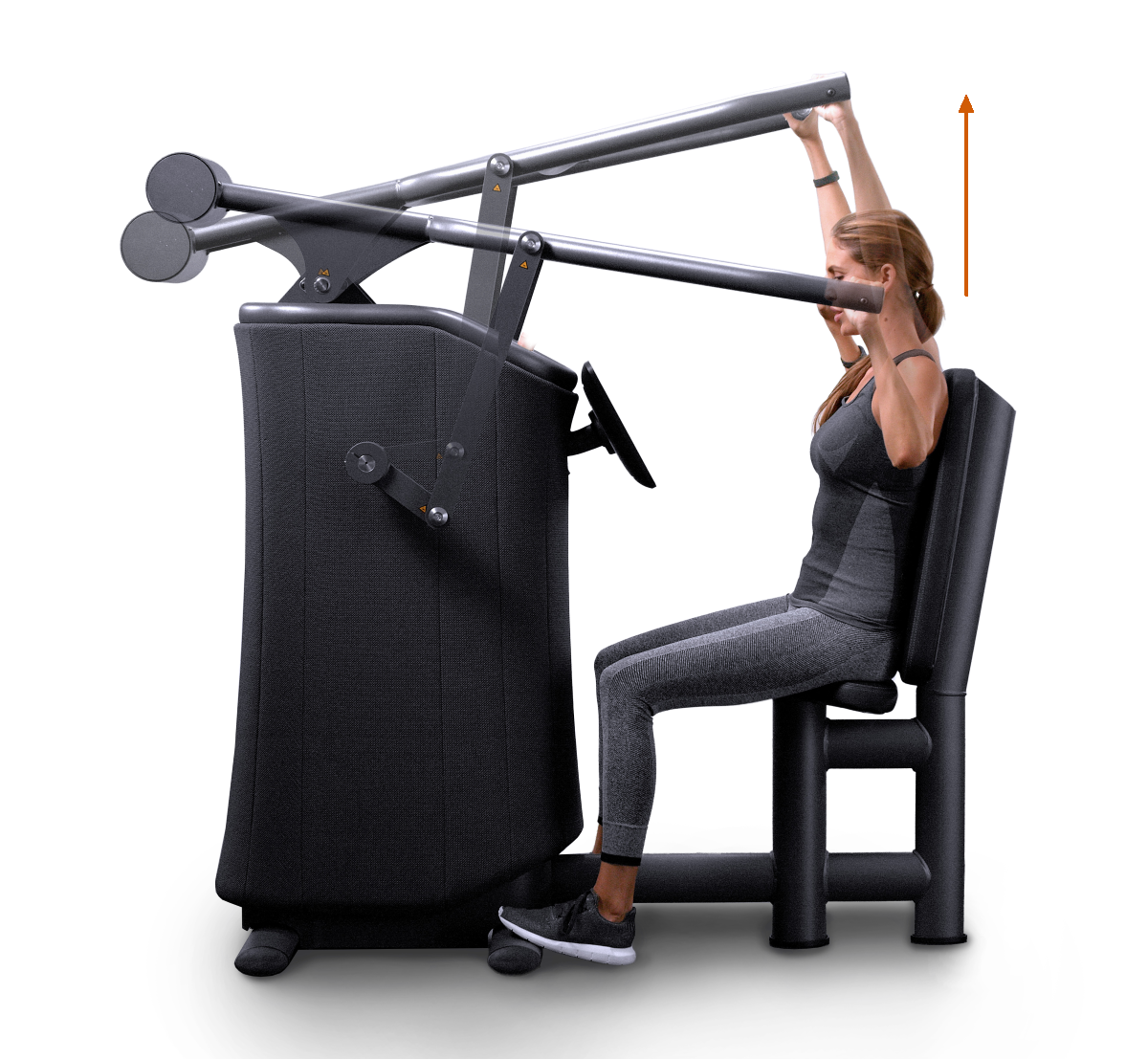 |
| |
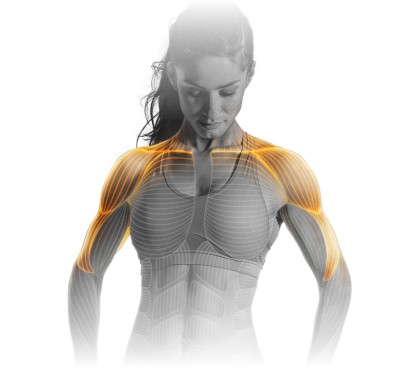
Primary muscles Lateral deltoid Triceps brachii Superior trapezius | ||
Secondary muscles Anconeus Rotator cuff muscles Serratus anterior Upper & lower trapezius |
Get ready
Sit with your back straight against the backrest.
Hold the handles with your elbows bent.
Note
Grip variation
Neutral grip (palms facing each other): more activation of the lateral deltoid and triceps, and reduced strain on the shoulder joint.
Pronated grip (palms facing the floor): more activation of the anterior deltoid and upper pectorals.
Start exercising
Start with the handles at eye level.
Press the handles upward against the resistance until your arms are almost straight. Keep your shoulders lowered and avoid locking your elbows.
Return to the starting position in a controlled motion.
 |
| |
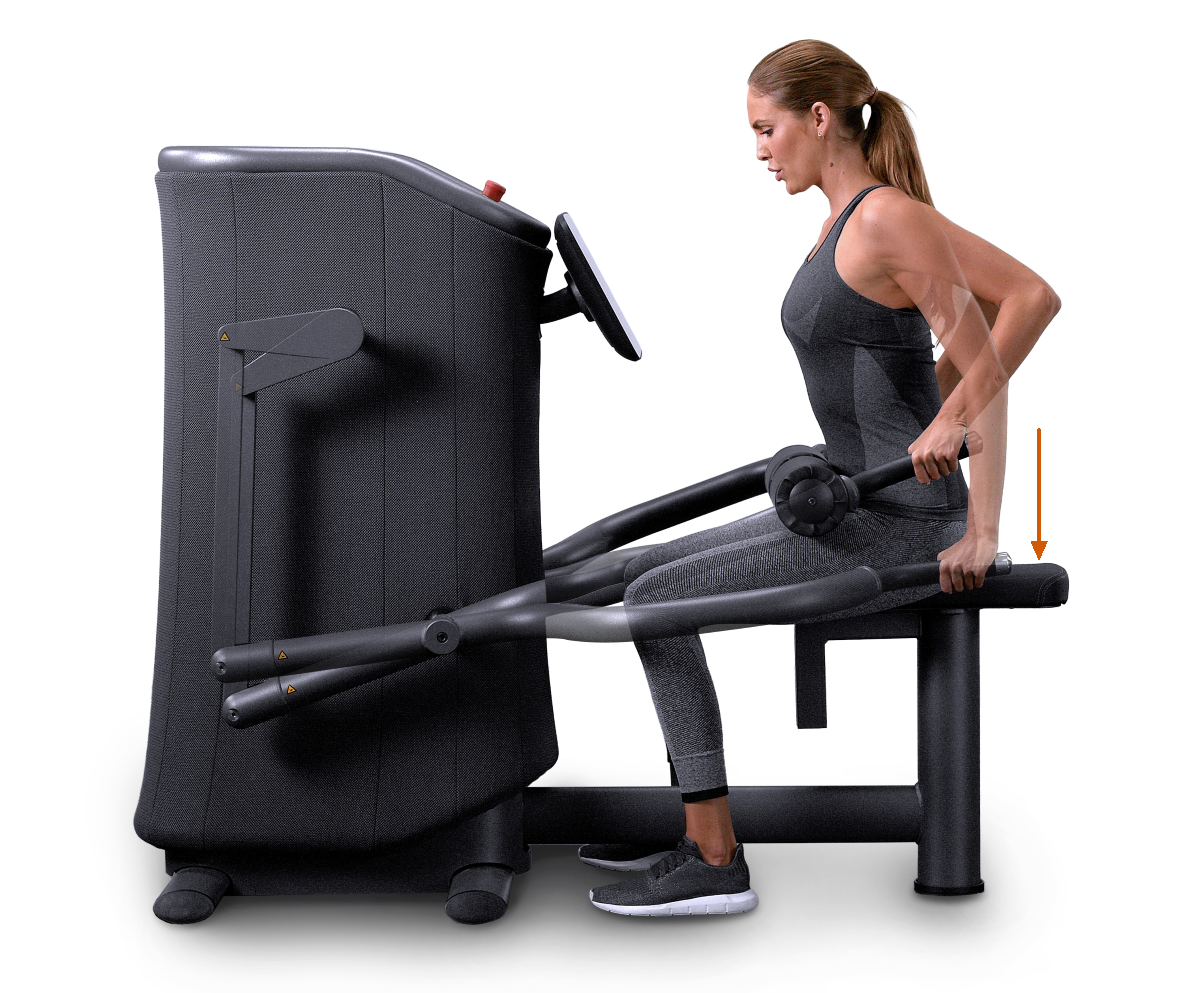
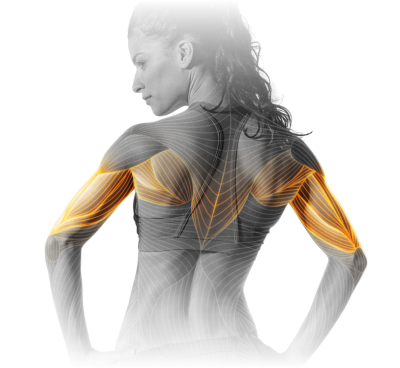
Primary muscles Triceps brachii | ||
Secondary muscles Anconeus Anterior deltoid Pectoralis major |
Get ready
Sit as far forward as possible on the seat.
Adjust the thigh pad so it rests firmly on your thighs.
Lean your upper body slightly forward while keeping your back straight.
Start exercising
Start with your elbows bent at approximately a right angle.
Extend your arms downward against the resistance. Stop when your elbows are slightly bent.
Caution
Do not lock your elbows.
Return to the starting position in a controlled motion, keeping your shoulders lowered and upper body stable.
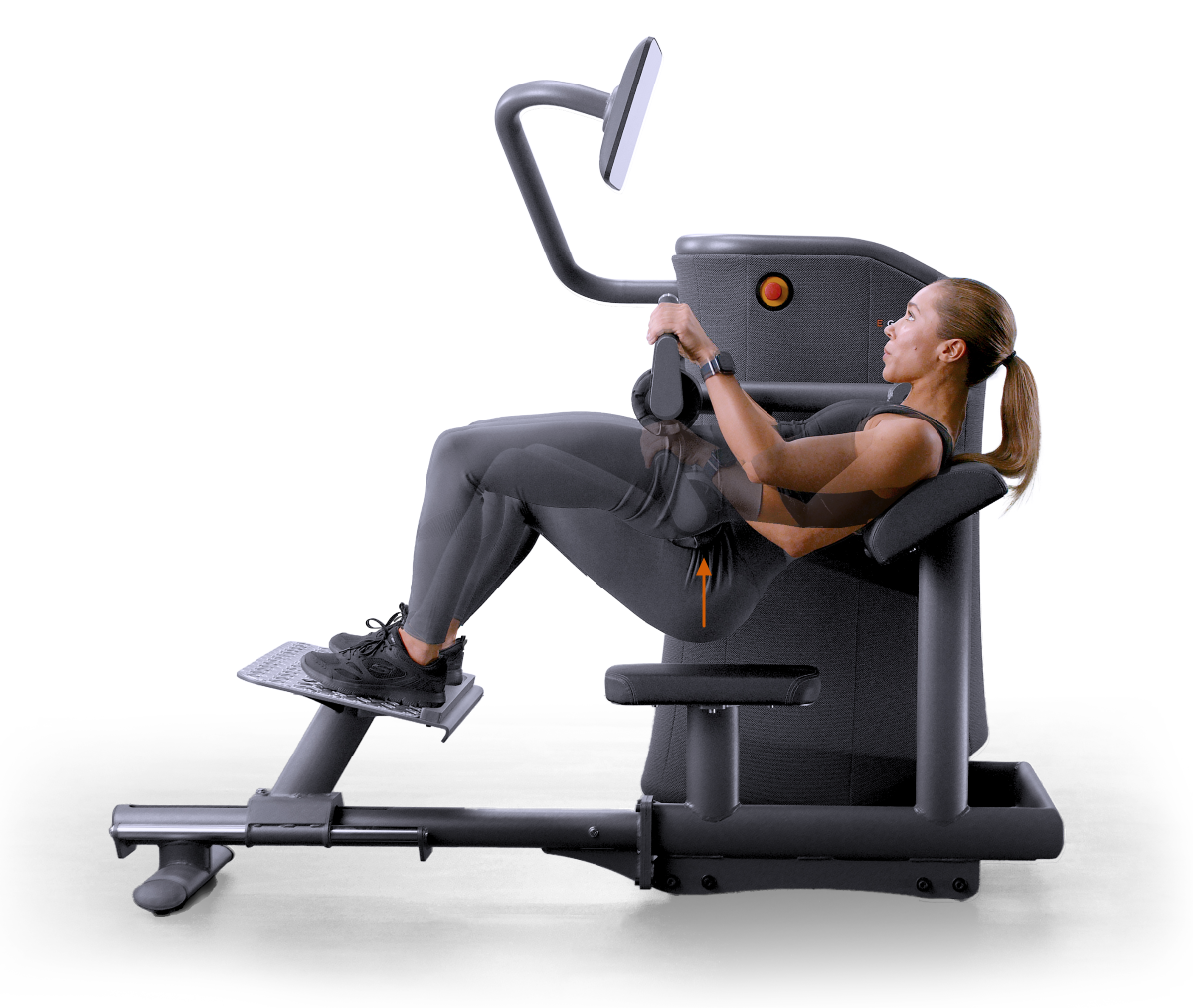 |
| |
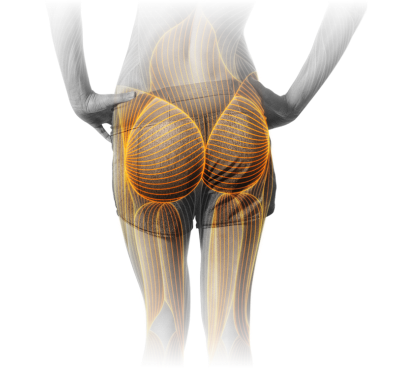
Primary muscles Gluteus maximus Hamstring | ||
Secondary muscles Erector spinae Musculus rectus abdominis Musculus gastrocnemius |
Get ready
Place your feet on the footplate with your heels against the raised edge and your toes pointed slightly outward.
Position the hip bones against the pad. Your glutes should not be touching the seat.
Position your upper back so your shoulder blades make contact with the backrest.
Hold the side handles for stability.
Start exercising
Start with your hips against the pad and keep your core engaged.
Drive your hips upward against the resistance until your body forms a straight line from shoulders to hips.
Lower your hips back to the starting position in a controlled motion.
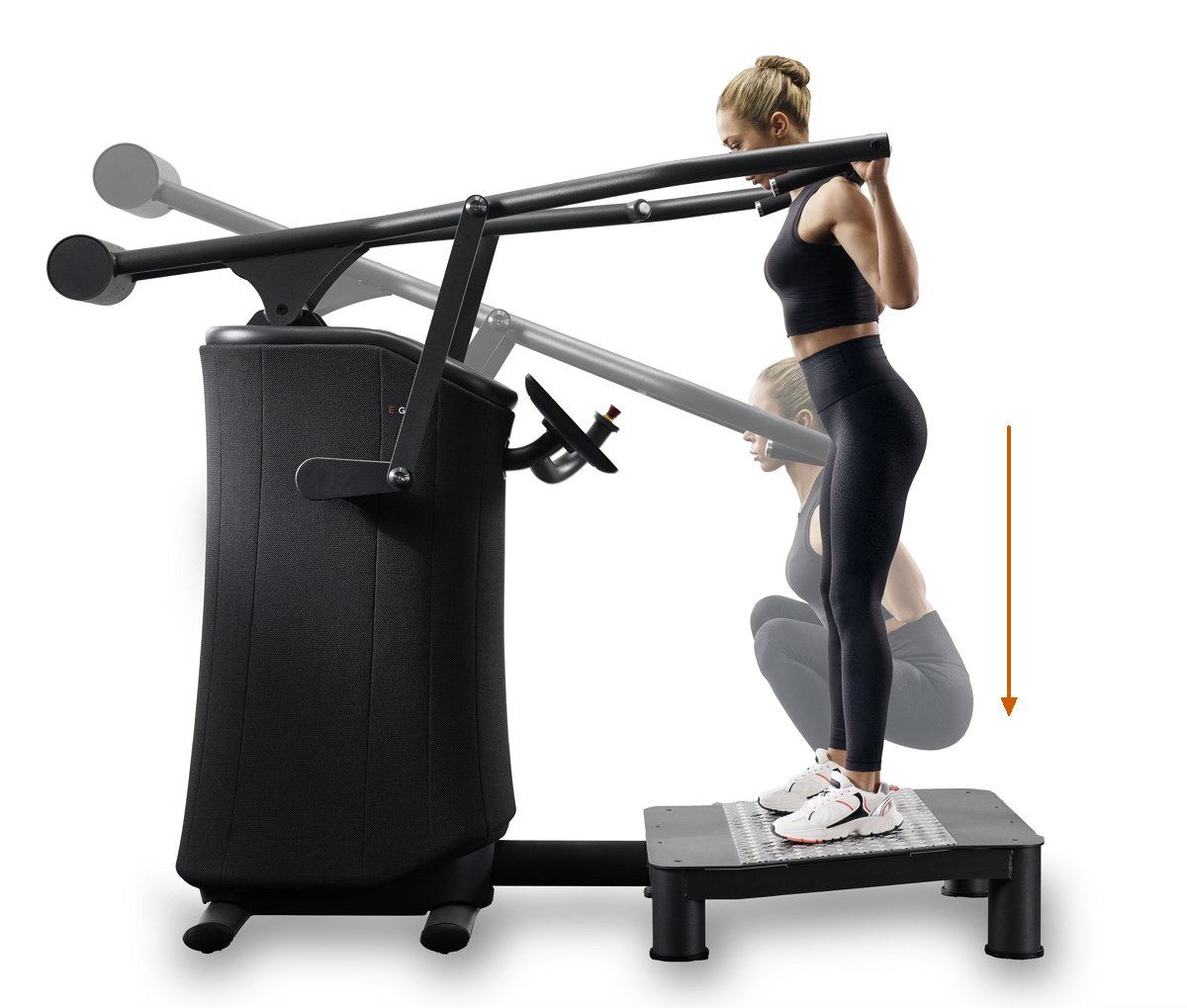 |
| |
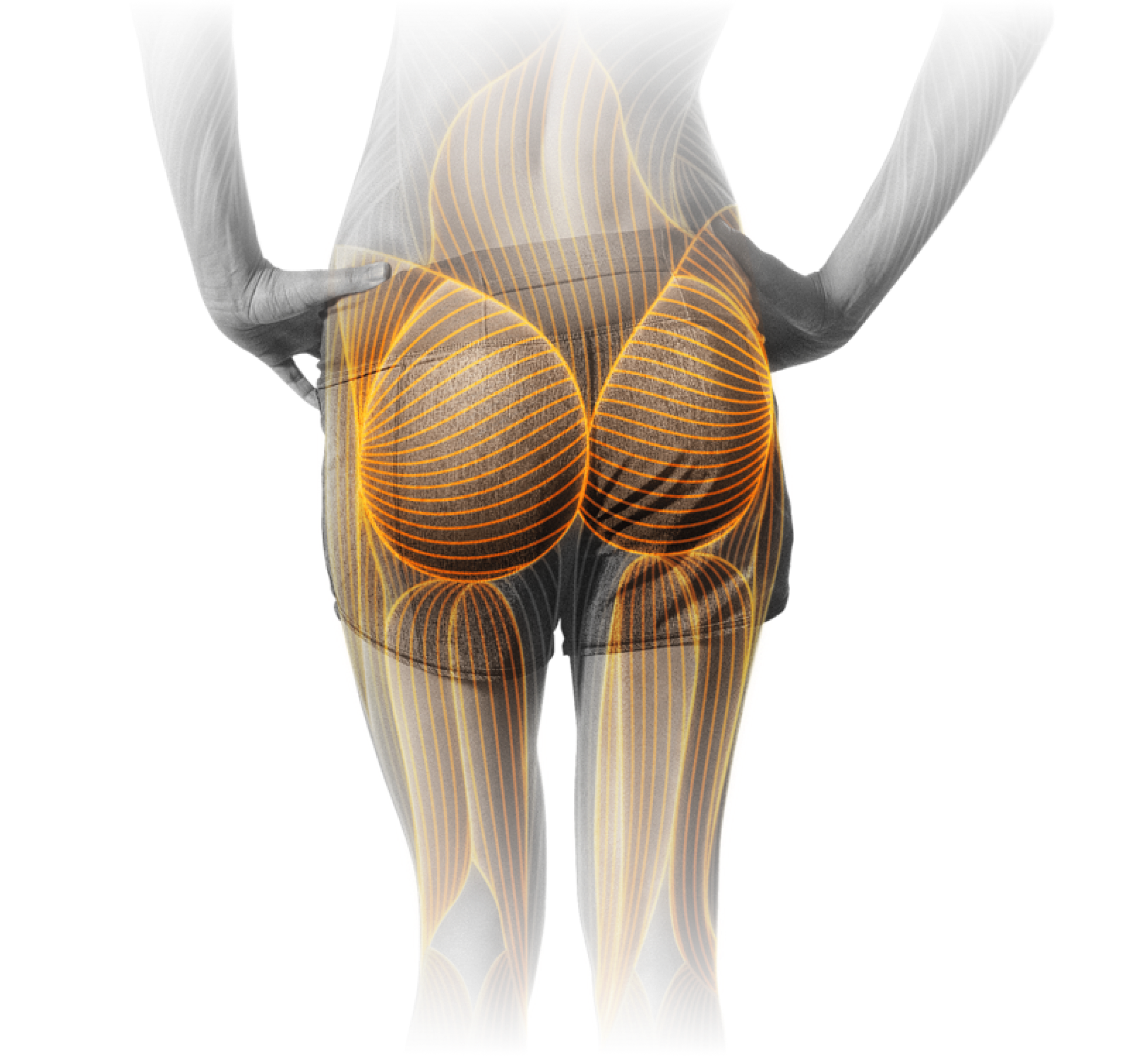
Primary muscles Quadriceps Gluteus maximus | ||
Secondary muscles Hamstring Erector spinae | ||
Tertiary muscles Muscles of the core Gastrocnemius |
Caution
Use caution when stepping on or off the platform to prevent tripping.
Get ready
Step carefully onto the platform.
Position yourself under the bar with your feet shoulder-width apart and toes pointing slightly outward.
Rest the bar on your shoulders and squeeze your shoulder blades together.
Engage the core and keep your chest lifted.
Start exercising
Start from an upright standing position with your core engaged.
Lower your body by pushing the hips down and back while keeping your knees aligned with your feet.
Push through your feet to extend the hips and knees and return to the upright position. Keep your core engaged and back straight.
Caution
To safely stop training from any position, press the Easy-Stop button on the right side of the bar.
- Maximum training weight
The maximum weight a user can select for training.
- Maximum strength value
The maximum strength possible during a strength test.
EGYM machine | Maximum training weight | Maximum strength value | |
|---|---|---|---|
M1 | Leg Extension | 175 kg (386 lbs.) | 230 kg (508 lbs.) |
M2 | Abdominal Crunch | 100 kg (221 lbs.) | 150 kg (331 lbs.) |
M3 | Back Extension | 125 kg (276 lbs.) | 200 kg (441 lbs.) |
M4 | Leg Curl | 120 kg (265 lbs.) | 175 kg (386 lbs.) |
M5 | Chest Press | 165 kg (364 lbs.) | 220 kg (486 lbs.) |
M6 | Seated Row | 165 kg (364 lbs.) | 220 kg (486 lbs.) |
M7 | Lat Pull | 165 kg (364 lbs.) | 220 kg (486 lbs.) |
M8 | Gluteus | 100 kg (221 lbs.) | 150 kg (331 lbs.) |
M9 | Leg Press | 260 kg (574 lbs.) | 375 kg (827 lbs.) |
M10 | Abductor | 150 kg (331 lbs.) | 200 kg (441 lbs.) |
M11 | Adductor | 150 kg (331 lbs.) | 200 kg (441 lbs.) |
M12 | Rotary Torso | 100 kg (221 lbs.) | 130 kg (287 lbs.) |
M13 | Butterfly | 100 kg (221 lbs.) | 140 kg (309 lbs.) |
M14 | Butterfly Reverse | 100 kg (221 lbs.) | 120 kg (265 lbs.) |
M15 | Bicep Curl | 100 kg (221 lbs.) | 120 kg (265 lbs.) |
M16 | Calf Press | 180 kg (397 lbs.) | 240 kg (530 lbs.) |
M17 | Shoulder Press | 150 kg (331 lbs.) | 200 kg (441 lbs.) |
M18 | Triceps | 200 kg (441 lbs.) | 250 kg (552 lbs.) |
M19 | Hip Thrust | 250 kg (551 lbs.) | 300 kg (661 lbs.) |
M20 | Squat | 220 kg (470 lbs.) at 230 / 240V * 150 kg (330 lbs.) at 100V / 110V | 235 kg (518 lbs.) at 230 / 240V * 150 kg (330 lbs.) at 100V / 110V |
Caution
* The M20 Squat can operate with different voltage configurations. The higher voltage configuration allows higher training weights. Before installing the machine with a high voltage outlet, check your machine’s configuration. The M20 voltage configuration may only be changed by an EGYM service technician.